Contribute
| Akshata In Hindu Puja --The Vedic Significance Of Sacred RiceAkshata |
Pandit Bharani
11/27/2026
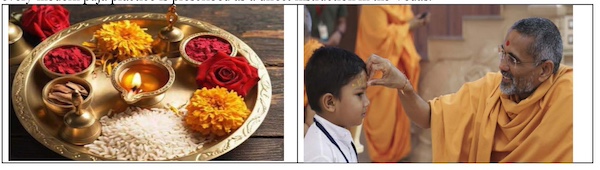
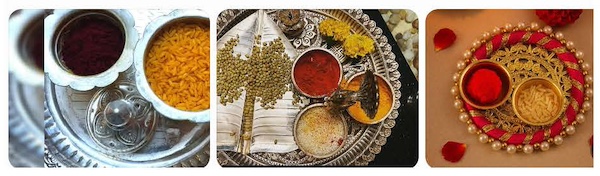
In Hindu worship, even the smallest offering carries a profound spiritual meaning. Among the many sacred items used in puja, Akshata (अक्षत), or unbroken rice grains, holds a special place. Whether during Ganapati Puja, Lakshmi Puja, Satyanarayan Puja, weddings, housewarming ceremonies or daily worship, Akshata is offered to deities and distributed as a blessing to devotees. Although it appears to be a simple handful of rice, Akshata represents some of the deepest principles of Hindu philosophy: completeness, auspiciousness, abundance, fertility and the wish for an undisturbed, prosperous life. What Does Akshata Mean? The Sanskrit word Akshata is derived from two elements: Thus, Akshata means that which is unbroken, unharmed or complete. The unbroken rice grain becomes a symbolic representation of life's wholeness. When devotees offer Akshata to God, they express a prayer that their lives, families, relationships and spiritual journeys may remain protected, complete and blessed. In traditional Hindu worship, whole, clean rice grains are preferred over broken grains because they represent completeness and the wish for uninterrupted prosperity. Vedic Understanding of Akshata The Vedic tradition gives great importance to Anna (food), particularly grains, as the foundation of life. Food is not regarded merely as nourishment for the body but also as a divine gift that sustains all living beings. The Taittiriya Upanishad (3.7.1) declares: अन्नं न निन्द्यात्। तद् व्रतम्। Annam na nindyāt. Tad vratam. Meaning: "One should never disrespect food. This should be one's vow." The Taittiriya Upanishad also teaches: अन्नं ब्रह्मेति व्यजानात्। Annam Brahmeti Vyajānāt. Meaning: "One should understand food as Brahman, the Supreme Reality." These teachings help us understand why grains occupy such an important place in Hindu rituals. Offering rice is not simply an offering of an agricultural product; it is an expression of gratitude to the Divine for the food, nourishment and abundance that sustain life. Another interesting connection appears in the Rig Veda (7.99.3), which invokes prosperity through nourishing food, cattle and fertile pastures. This verse is also used in a traditional ritual context associated with offering unbroken rice to Lord Vishnu. It beautifully connects the symbolism of Akshata with fertility, nourishment and prosperity. It is important to distinguish that the meaning of the word Akshata and its widespread use in puja belong to the broader Sanskrit and Hindu ritual tradition; not every modern puja practice is prescribed as a direct instruction in the Vedas. Why Is Akshata Offered During Puja? Akshata has several spiritual and symbolic meanings: 1. Symbol of Completeness: Unbroken grains represent wholeness. Offering them expresses the devotee's prayer for completeness in physical, emotional and spiritual life. 2. Symbol of Prosperity: Rice is one of India's most important food grains. It represents nourishment, agricultural abundance and the blessings of Goddess Lakshmi. 3. Symbol of Fertility and Continuity: The grain carries the potential to produce more grains. It therefore symbolizes growth, creation, continuity and the well-being of future generations. 4. Symbol of Surrender: When devotees offer Akshata, they symbolically surrender their actions, thoughts and material possessions to the Divine. The value of the offering lies not in its quantity but in the sincerity of devotion. 5. A Substitute for Other Offerings: In several traditional puja procedures, Akshata may be offered symbolically in place of certain decorative or material offerings when those items are unavailable. This reflects the principle that sincere devotion is more important than material abundance. Why Is Turmeric or Kumkum Mixed with Akshata? In many Indian traditions, particularly in South India, rice grains are mixed with turmeric to prepare yellow Akshata. In other ceremonies, kumkum is added to create red Akshata. Together, these ingredients make Akshata an offering that symbolizes the devotee's prayer for health, happiness, prosperity and divine protection. Why is Akshata placed on the head? One of the most beautiful traditions in Hindu worship is receiving Akshata from a priest or elder, who gently places the sacred grains on the devotee's head. This gesture represents the transmission of blessings and good wishes. The head is traditionally regarded as an important center of knowledge, consciousness and dignity. Receiving Akshata symbolizes a prayer that divine grace may guide one's thoughts, decisions and actions. During weddings, elders shower Akshata on the bride and bridegroom, blessing them with a harmonious married life, prosperity, happiness and the continuity of family traditions. The Scientific and Practical Perspective Apart from its spiritual significance, rice has played an important role in Indian civilization for thousands of years. It is a valuable source of nourishment and has traditionally symbolized food security and agricultural prosperity. The choice of whole grains also carries a practical and symbolic meaning: an intact grain visibly represents completeness and the potential for growth. Turmeric contains curcumin and other bioactive compounds, while rice provides carbohydrates that serve as an energy source. These nutritional properties should not be confused with claims that ritual Akshata itself produces scientifically established healing or protective effects. A Beautiful Prayer Behind Every Grain The next time we offer a few grains of Akshata during puja, we should remember that the offering is much more than a ritual gesture. It is a humble expression of gratitude for the food we receive, the family we cherish, the relationships we nurture and the blessings we seek. Hindu philosophy teaches that the Divine does not measure devotion by the cost or quantity of an offering. What matters is the purity of the heart and sincerity of the prayer. As the unbroken grain symbolizes completeness, may our lives also remain complete with health, peace, wisdom, prosperity and spiritual fulfillment. Akshata reminds us that the greatest offering to God is not material wealth, but a heart filled with gratitude, faith and devotion.
You may also access this article through our web-site http://www.lokvani.com/