Contribute
| Arangetram: Sahasra Lingisetty |
Ramya Ramachandran
11/27/2026
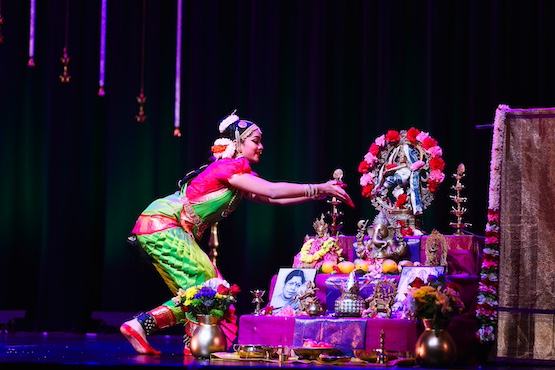
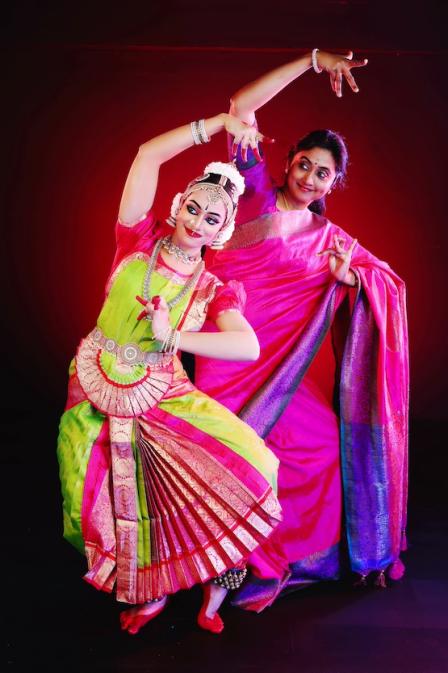
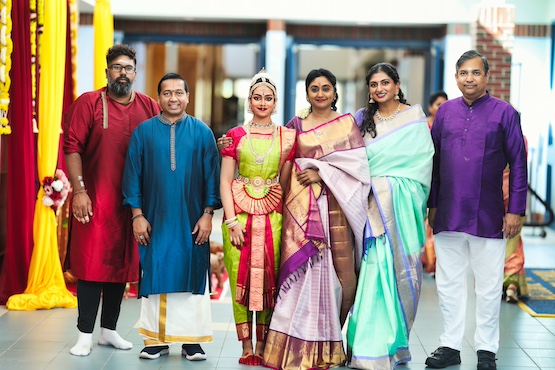
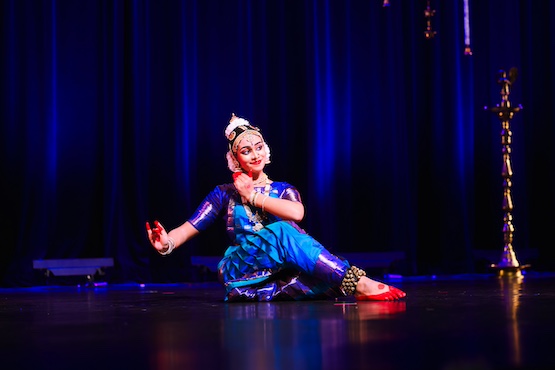
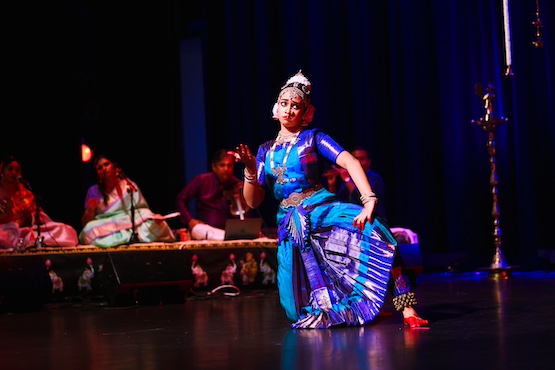
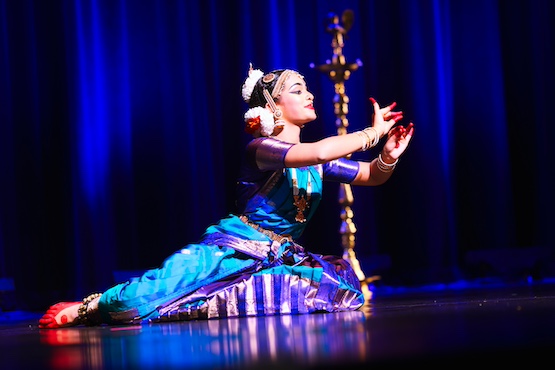
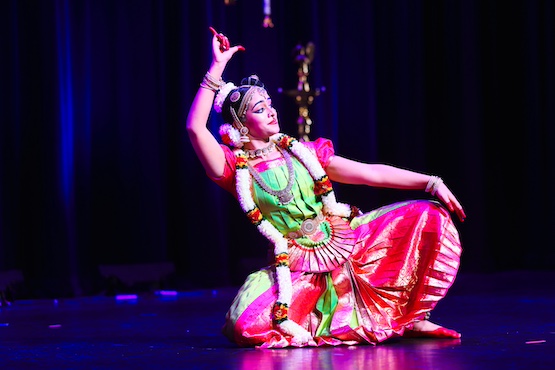
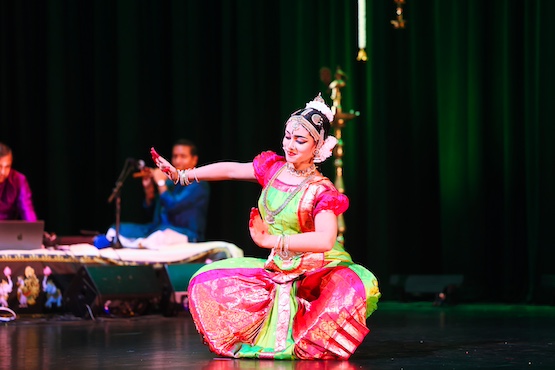
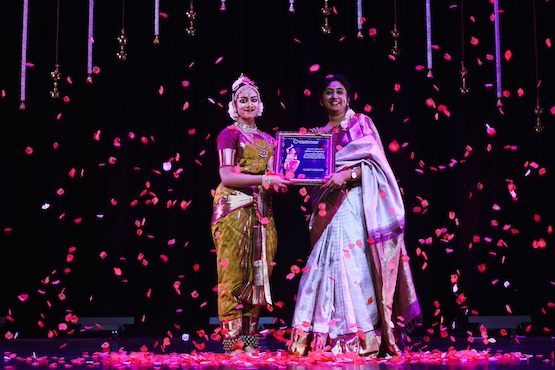
Sahasra Lingisetty’s Bharatanatyam Arangetram: A Graceful Journey of Discipline, Devotion and Expression On Saturday, September 5, 2026, Sarasa Natya Academy presented the Bharatanatyam Arangetram of Sahasra Lingisetty, disciple of Guru Smt. Preethi Ramesh, at Littleton High School in Littleton, Massachusetts. The occasion was graced by respected teachers and well-wishers from the local arts community, including Smt. Tara Bangalore, Smt. Sapna Krishnan, Smt. Jeyanthi Ghatraju, Smt. Aparna Balaji, and Smt. Rekha Dheendalayan. Vidwan Sudarshan Chakravarthy, Sahasra’s mridangam Guru, was also present, adding another meaningful connection to her training in Indian classical music. An Auspicious Beginning The evening opened on an auspicious note with Sri Ganapathi Talam, beautifully rendered by Sahasra’s cousins, Kyvalya and Sayujya. Rich in devotion and rhythm, the invocation sought the blessings of Lord Ganesha, remover of obstacles and bestower of auspiciousness, setting a heartfelt tone for the evening. Sahasra then began her margam with Pushpanjali, set in Gowlai and Adi Tala and composed by Madurai T. Muralidaran. As a traditional floral offering to Lord Nataraja, the Guru, and the audience, it created an atmosphere of reverence and gratitude. This was followed by Thodaya Mangalam, an auspicious Aahvana Keerthanam, traditionally performed to create a devotional and sacred atmosphere. Often associated with the Vazhuvoor Bani, the piece welcomes the Divine through a sequence of devotional songs and reflects the lineage in which Sahasra has been trained. The Jatiswaram, set in Ragamalika and Misra Chapu and attributed to the Tanjore Quartet, shifted the focus entirely to nritta. Without lyrics or narrative, it allowed Sahasra to showcase crisp footwork, rhythm, geometry, control, and command over pure dance. Kanjadalayatakshi Kamakshi: Grace, Beauty and Devotion The expressive Kanjadalayatakshi Kamakshi, a composition of Muthuswami Dikshitar in Kamala Manohari and Adi Tala, provided a rich canvas for Sahasra’s abhinaya. Celebrating Goddess Kamakshi of Kanchipuram, the piece came alive through portrayals of her lotus-like eyes, stately elephant-like gait, moon-like radiance, divine beauty, and majestic grace. The composition also evokes imagery associated with the Lalitha Sahasranamam, while Sahasra’s storytelling touched upon Kamakshi’s penance and eventual union with Lord Ekambareswarar. Through delicate expressions and controlled movement, Sahasra moved gracefully between beauty, strength, devotion, and storytelling. The Varnam: The Heart of the Margam The centerpiece of the evening was the Varnam, “Ninne Nera Nammi Naanura,” set in Atana and Adi Tala and composed by Thuraiyur Raja Gopala Sharma. As the heart of a traditional Bharatanatyam margam, the Varnam places tremendous demands on the dancer, testing stamina, rhythmic precision, technical command, and emotional depth. Its central sentiment of complete faith and surrender to Lord Krishna gave Sahasra a broad canvas for storytelling. The sancharis moved through Dhruva’s unwavering devotion, the dramatic Mahabharata dice-hall episode and Draupadi’s appeal to Krishna, and the wondrous moment when Yashoda beholds all three worlds within the mouth of the child Krishna. Sahasra brought a different energy to Kalinga Narthanam, portraying Krishna’s triumph over the serpent Kalinga, and to the episode of Krishna lifting Govardhana Hill to protect his people. Krishna was also portrayed as Parthasarathy, the charioteer and divine guide of Arjuna. Here, he emerged not only as protector but also as counselor and guide. Together, these episodes revealed Krishna as child, protector, savior, guide, and Supreme Being, allowing Sahasra to move through tenderness, devotion, pathos, heroism, wonder, and dramatic intensity. Balancing these expressive passages with demanding jathis required considerable stamina and concentration, and Sahasra carried the Varnam with confidence and commitment. Chandrachooda Shiva: Power and Grace in Balance Chandrachooda Shiva, a Purandara Dasa composition in Ragamalika and Adi Tala, celebrated the many attributes of Lord Shiva, including the crescent moon adorning his locks, the mighty Pinaka bow, the river Ganga, and the powerful imagery associated with the Lord. Through dynamic movement and expressive abhinaya, the piece explored the fierce energy of Shiva alongside the gentle grace of Goddess Parvati, beautifully reflecting a cosmic balance between strength and serenity. Sahasra’s interpretation also incorporated the story of Markandeya, adding dramatic intensity as Shiva emerged as the protector of his ardent devotee. Endaroo Mahanubhavulu: Reverence for Those Who Came Before Another meaningful selection was Endaroo Mahanubhavulu, Saint Tyagaraja’s celebrated Pancharatna Kriti in Sri Ragam and Adi Tala. The composition is a prayer of humility and reverence toward great saints, teachers, musicians, and spiritual seekers. Its swara-sahitya structure allowed Sahasra to alternate between crisp nritta and expressive abhinaya. The piece carried an additional layer of personal significance because it was choreographed by Smt. Rekha Dheendalayan, Sahasra’s first Bharatanatyam teacher. It was especially meaningful to see Sahasra perform choreography by the Guru who first introduced her to the art form, now as part of her Arangetram under Guru Smt. Preethi Ramesh. A Vibrant Finale and Tribute to Tradition The recital culminated with a Thillana in Nata Bhairavi, composed by Veenai Sri Krishnamachariar. The piece brought vibrant energy to the stage through rapid rhythmic patterns, sculptural poses, and lively footwork. Created as an offering of gratitude to legendary dancer and cultural revivalist Smt. Rukmini Devi Arundale and Kalakshetra, the institution she founded in Chennai, the Thillana also carried a broader sense of reverence for the Guru Parampara and the traditions that sustain the art across generations. Following the Thillana, Sahasra concluded the recital with Mangalam, the traditional auspicious ending, expressing gratitude to her Guru, the orchestra, the audience, and all those who supported her journey. A Radiant and Distinctive Stage Presence Sahasra looked radiant throughout the evening, with impeccable makeup, beautifully coordinated jewelry, and costumes that were vibrant, sophisticated, and refreshingly unique. The uncommon color combinations were particularly eye-catching and gave each appearance a distinctive visual identity while complementing the mood of the repertoire. The musicians supported the rhythm, emotion, transitions, and storytelling with sensitivity. The interplay of nattuvangam, vocal music, mridangam, violin, flute, and dance added vitality and emotional depth to the margam. Guru Smt. Preethi Ramesh’s nattuvangam deserves special mention. Strong, precise, and powerful throughout the recital, her commanding delivery formed the rhythmic backbone of the Arangetram. The clarity of her sollukattus, the energy of her delivery, and her close synchronization with Sahasra reflected the deep Guru-Shishya connection at the heart of the performance. The evening was emceed by Vaishnavi Murthy and Anjana Muraleedaran, young members of Sarasa Natya Academy who recently completed their own Arangetrams. One of the most thoughtful reflections of the evening came from Smt. Jeyanthi Ghatraju, who invited the audience to view the Bharatanatyam margam not simply as a sequence of items, but as a pilgrimage. She reflected on the idea that the dancer begins such a journey by offering the body, mind, and soul to the Divine. In that spirit, Pushpanjali becomes the first sacred offering, while the invocation to Lord Ganesha seeks his presence and blessings to remove obstacles along the way. As the margam unfolds, the dancer and audience seem to move symbolically deeper into the temple and into the inner journey itself through rhythm, bhava, mythology, devotion, and surrender. Smt. Jeyanthi also highlighted the significance of the concluding Thillana and its homage to Smt. Rukmini Devi Arundale and Kalakshetra. Her remarks recalled Rukmini Devi’s far-reaching contribution in helping Bharatanatyam reach wider audiences and creating a strong institutional space for teaching, preservation, and transmission to future generations. Taken together, her reflections gave the recital the feeling of a true pilgrimage, beginning with invocation and surrender, moving through devotion and storytelling, and culminating in gratitude toward Gurus, visionaries, and the traditions that sustain the art. A particularly touching moment came when Sahasra’s mother, Supriya Somarouthu spoke in Tamil, offering heartfelt thanks to both Guru Smt. Preethi Ramesh and Smt. Rekha Dheendalayan. Her words carried the warmth and gratitude of a parent who had witnessed Sahasra’s journey from her earliest lessons to this important milestone, beautifully acknowledging the role of both teachers in shaping her path in Bharatanatyam. A Memorable Milestone Sahasra Lingisetty’s Arangetram was a beautiful celebration of discipline, devotion, tradition, storytelling, and artistic growth. From the auspicious invocation and Pushpanjali to the expressive portrayal of Kamakshi, the demanding Varnam, the contrasting energies of Chandrachooda Shiva, the meaningful Endaroo Mahanubhavulu, and the exuberant Thillana, the recital showcased both the breadth of Bharatanatyam and the years of dedication required to present a complete margam. Congratulations to Sahasra, Guru Smt. Preethi Ramesh, her family, the orchestra, and the entire Sarasa Natya Academy community on this beautiful milestone. An Arangetram may signify a dancer’s ascent onto the stage, but it also marks the beginning of a deeper relationship with the art form. Sahasra’s evening reflected a young dancer stepping confidently into that next chapter with the blessings of her Gurus, family, musicians, and artistic community. Credits Nattuvangam: Guru Smt. Preethi Ramesh Emcees: Kum. Vaishnavi Murthy and Kum. Anjana Muraleedaran
Vocal: Smt. Veena Sivaraman
Mridangam: Sri. Prasanth Pranavanathan
Violin: Sri. Sri Ananda Nadayogi
Flute: Sri. Soulapurapu Kumar Babu
Photography: Mr. Jeyakumar Sathyamoorthy
Videography: Mr. Krish Velmurugan
Makeup: Smt. Anu Metra
Event Decoration: Smt. Anita Athipathy
You may also access this article through our web-site http://www.lokvani.com/