
Contribute
| Kalava Or Moli: The Sacred Thread Of Protection, Faith And Scientific Wisdom |
Pandit Bharani
11/18/2026
In Hindu tradition, even the simplest rituals carry profound spiritual meaning and reflect the wisdom of our ancient sages. One such beautiful tradition is tying the sacred thread known as Kalava, Moli, or Raksha Sutra around the wrist. It is commonly performed during pujas, festivals, weddings and other auspicious ceremonies. Though simple in appearance, this sacred thread symbolizes divine protection, faith, purity and a commitment to righteous living. Traditionally made of cotton threads in red, yellow, or a combination of both, Kalava is tied by a priest while chanting sacred mantras. The ritual represents a prayer for protection from negative influences, obstacles and misfortune. Spiritual and Vedic Significance The Sanskrit word Raksha Sutra means a thread of protection. Red symbolizes Shakti, the divine feminine energy, courage, strength and auspiciousness. Yellow represents knowledge, purity, prosperity and spiritual wisdom. Together, these colors symbolize the balance of strength and wisdom. The sacred thread also represents Sankalpa, or a spiritual resolution. Wearing it reminds an individual to follow Dharma, practice self-discipline, speak the truth and perform good deeds. It is not merely an ornament but a symbol of one's commitment to spiritual values. One of the most commonly recited mantras while tying Kalava is: Raksha Sutra Mantra येन बद्धो बलिराजा दानवेन्द्रो महाबलः। Transliteration: Yena Baddho Bali Raja Danavendro Mahabalah, Meaning: "With the sacred thread with which the mighty King Bali was bound, I tie this thread around you. O sacred thread of protection, may you remain firm and protect the wearer." This traditional mantra invokes protection, stability and divine blessings. It is associated with the story of King Mahabali and is widely recited during Raksha Sutra ceremonies. Why Is Kalava Tied Around the Wrist? In many Hindu traditions, Kalava is tied around the right wrist of men and unmarried women and the left wrist of married women. However, customs vary among regions and families. The wrist is symbolically connected with action and Karma because our hands are instruments through which we perform our duties. Wearing the sacred thread reminds us that our actions should be guided by Dharma, honesty and compassion. Whenever we look at it, we are reminded of the prayers and positive intentions made during the puja. The Scientific Perspective Although Kalava has deep spiritual significance, its practice can also be understood through certain psychological and scientific principles. 1. Psychological reminder: The thread acts as a symbolic reminder of one's promises, responsibilities and positive intentions. Seeing it can encourage mindfulness, self-discipline and ethical behavior. 2. Rituals and mental well-being: Psychological research suggests that meaningful rituals, prayer and chanting can provide emotional reassurance, reduce uncertainty and create a sense of belonging. Such practices may promote calmness and spiritual confidence. 3. Significance of cotton: Traditional Kalava is generally made from cotton, a natural and breathable material that is comfortable when tied loosely around the wrist. Its simplicity reflects the traditional use of natural materials in religious practices. However, there is no established scientific evidence that cotton threads provide medical protection. 4. Mantra chanting and sound: Sanskrit mantra chanting involves rhythmic breathing, vocal repetition and focused attention. Research on meditation and chanting suggests that these practices may promote relaxation, concentration and stress management. Repeating a sacred mantra also creates an atmosphere of devotion and mindfulness. It is important to distinguish spiritual beliefs from scientifically proven effects. There is no conclusive evidence that tying Kalava stimulates specific nerves, improves blood circulation or controls blood pressure. Its more understandable benefits relate to mindfulness, emotional reassurance and cultural connection. A Tradition That Connects Generations Kalava is a tradition passed down through generations, connecting children, adults and elders through faith and cultural values. It is tied during Raksha Bandhan, Navaratri, Ganesh Chaturthi, Satyanarayan Puja, weddings, housewarming ceremonies and many other auspicious occasions. The thread reminds us that protection is not simply about avoiding difficulties; it is also about developing the courage, patience and wisdom to face life's challenges. It connects the individual with family traditions, community and devotion. The tradition of tying Kalava or Moli beautifully combines spirituality, symbolism and human psychology. Its red and yellow threads represent strength, wisdom and auspiciousness, while the accompanying mantra expresses a prayer for divine protection and stability. Ultimately, the true protection symbolized by Kalava lies not only in the thread around our wrist but also in the values we carry in our hearts. It reminds us to follow Dharma, speak the truth, perform good deeds and live with compassion. A sacred thread may be small, but the faith, values and blessings it represents are lifelong.
तेन त्वामभिबध्नामि रक्षे मा चल मा चल॥
Tena Tvam Abhibadhnami Rakshe Ma Chala Ma Chala.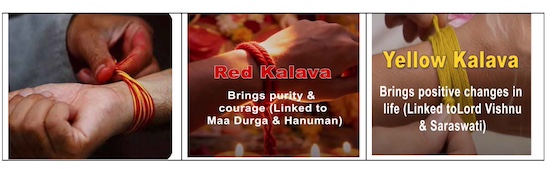
You may also access this article through our web-site http://www.lokvani.com/
