Contribute
| Arangetram: Aishwarya Balakrishnan |
Press Release
10/12/2026
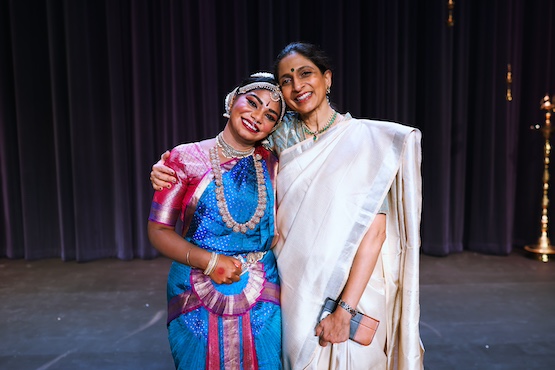
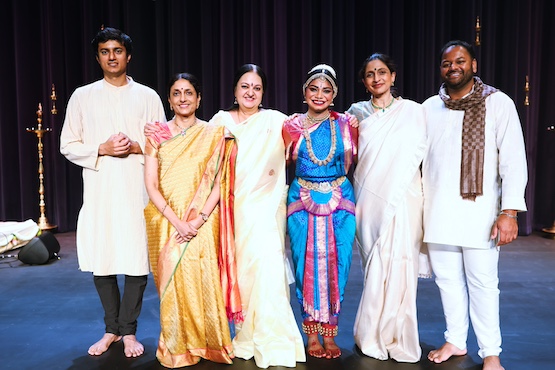
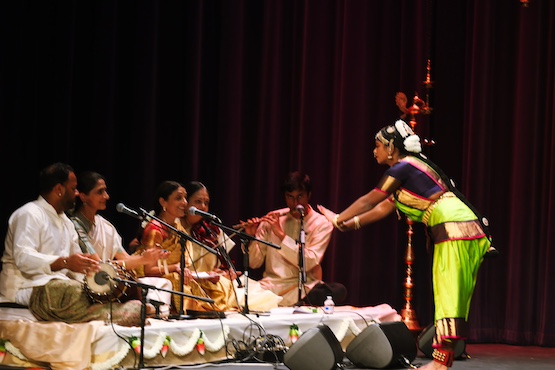
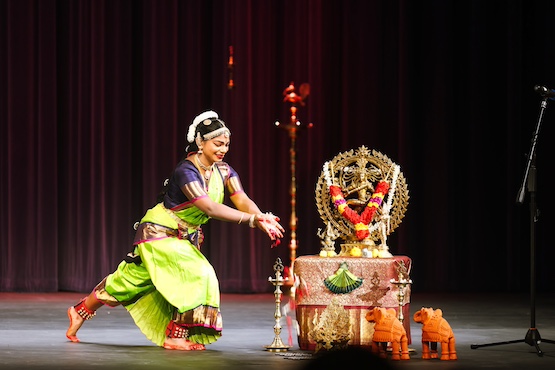
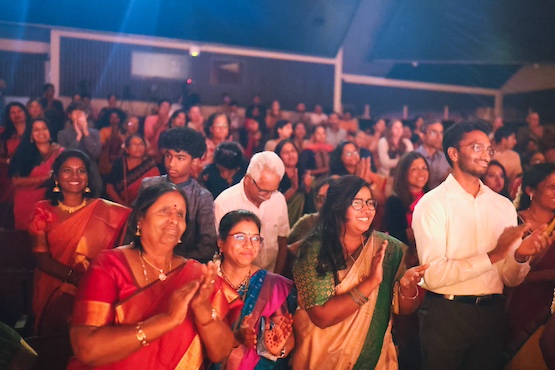
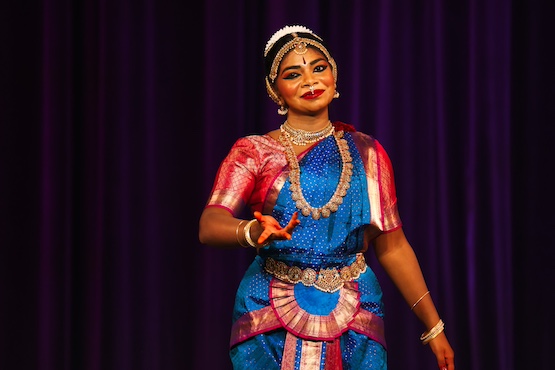
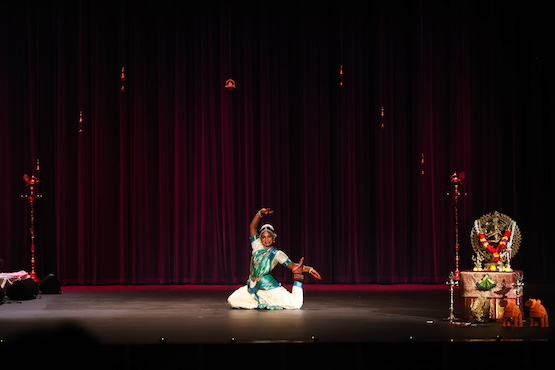
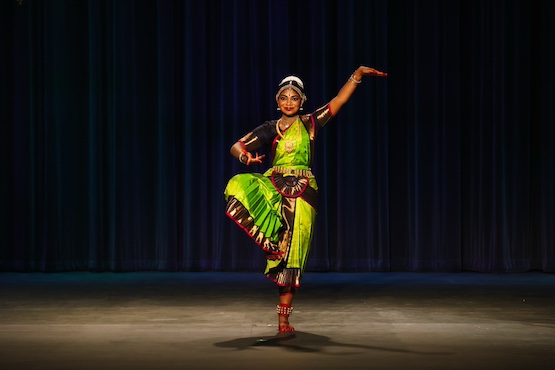
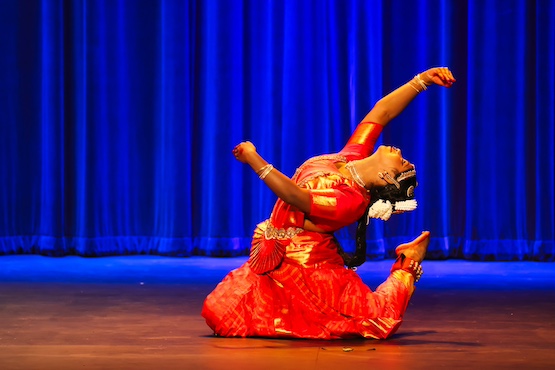
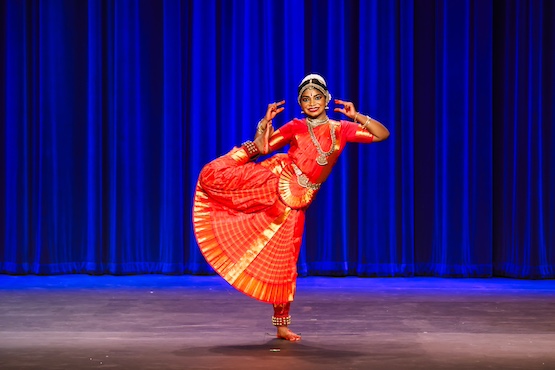
On September 12, 2026, Aishwarya Balakrishnan, lovingly known as Aishu, presented her Bharatanatyam Arangetram at the Scottish Rite Masonic Museum & Library, in a program dedicated to the timeless tradition of the dance, the enduring guru-shishya bond, and the community whose encouragement made the milestone possible. Aishu is a devoted disciple of Guru Smt. Sunanda Narayanan, an acclaimed exponent of the Vazhuvoor tradition and director of the Thillai Fine Arts Academy in Newton, MA. A rising sophomore at Needham High School, Aishu lovingly dedicated the performance to her paternal grandfather, her Thatha, a teacher himself, whose example instilled in her a deep reverence for teachers and their lasting influence. Guru Sunanda opened the afternoon with a warm welcome on behalf of the Thillai Fine Arts Academy, sharing with the audience that this was Aishu's very first performance and that devotion, to art, to teacher, and to family, would be the thread running through everything that followed. It was a promise the program kept from its first note to its last. The performance opened with a Jaya invocation, its beats held with a precision that announced, before a single adavu had been danced, how carefully this evening had been prepared. Guru Sunanda's own choreography, rooted in the aesthetic principles of the Vazhuvoor bani, gave Aishu a repertoire that was at once traditional and personal, and Aishu rose to meet its demands with composure well beyond what one would expect of a young dancer at this stage of her journey. The Thodaya Mangalam that followed was danced with a rhythmic and poetic sensibility that spoke of years of quiet, disciplined learning, a musical invocation in praise of the presiding deity of the Vazhuvoor temple. The Pushpanjali that came next was full of small, specific pleasures: Aishu's mudras during the invocation to Lord Ganesha were formed with real eloquence, complete with a lovely, unmistakable gesture toward the modakam, the sweet so closely associated with the elephant-headed god, and a coconut-breaking posture rendered with unusual clarity for a debutante. Woven into the Pushpanjali was a Tamil verse by the poet Subramanya Bharati honoring the role of a teacher, a fitting tribute to Aishu's grandfather and to the guru-shishya relationships that anchor this art form, and the item closed, fittingly, with a set of short prayer songs. Aishu's Alarippu that followed was clean and unhurried, the synchronized isolations of eyes, neck, shoulders, and limbs unfolding with the calm control that this “blossoming” item demands, set handsomely to the three-beat Tisram cycle. Later in this opening sequence, her aaramandi, the classical half-seated stance, built gradually and with real control, and a fully realized Nandi pose stood out as one of the evening's small triumphs of precision, every adavu landing exactly on the beat. Guru Sunanda paused before the next item to speak briefly about its rhythmic demands, and the Sabdam, “Kandhanae Unai,” bore that introduction out. It introduced abhinaya into the program in earnest, with Aishu portraying a dancer wounded by the seeming indifference of Muruga, the god of the Pazhani Hills. A single mudra formed at the mention of Kandhan drew a visible, appreciative reaction from the audience for its clarity, and a brief passage evoking Abhishegam, the ritual bathing of the deity, was handled with a polish well beyond what one expects from a first Arangetram. A fleeting reference to Vishnu's iconic pose and, later, an allusion to Kavadi within the lyrics were both picked out with a gestural clarity that rewarded close attention. Even in this early item, Aishu's expressions carried a sincerity that avoided the trap of over-performing emotion, letting the Ragamalika melody and Misra Chapu talam do quiet work alongside her. After a brief pause for a costume change, Aishu returned in a white silk with teal-green borders for the Varnam, “Swami Naan Undan Adimai,” rendered in praise of Lord Nataraja and set by Papanasam Sivan. This was, as it should be, the evening's centerpiece and the truest test of Aishu's range, and by any honest measure it was the performance's masterpiece. Bhava and jathi shared the stage in equal measure: Aishu demonstrated each jathi with clean, confident footwork before dissolving into passages of pure feeling, moving through longing, sorrow, flashes of quiet anger, and moments of near-meditative stillness within the space of only a few phrases, the transitions between them handled with a smoothness that belied her experience. The image of Nataraja, Shiva as Lord of Dance, remained the Varnam's classic, central image throughout, anchoring even its most technically demanding stretches. The second, faster half asked considerably more of her technically, and her handling of the nritta passages, sustained across a demanding thirty minutes, showed real stamina and an increasingly assured command of line and rhythm, building to more than one genuine goosebump moment in the audience by its final phrases. There were passages where the energy could have been driven a touch more forcefully through the concluding korvais, but this is the kind of seasoning that comes only with more stage time, and it did nothing to diminish the overall impact of a Varnam so well and thoughtfully danced. Following intermission, the orchestra shifted into Keeravani, and Aishu returned with two Kritis that showcased the emotional range Guru Sunanda has cultivated in her. “Devi Neeye Thunai” saw Aishu surrender to Goddess Meenakshi of Madurai, tracing the goddess's birth, her upbringing as a warrior princess, and her marriage to Lord Shiva with a narrative clarity that held the audience's attention through each turn of the story. “Naadhar Mudi,” set to Punnagavarali, brought a change of texture entirely, as Aishu took on the sinuous, swaying form of the cobra coiled atop Lord Shiva's head. This is a piece that rewards flexibility and sustained physical control, and Aishu met its demands with focus, even if a touch more abandon in the sway of the upper body would heighten the illusion further in future performances. The Kavadi Chindu, “Kannan Varugindra Neram,” brought a welcome lightness to the second half, its folk melody and Tisra Gathi rhythm capturing the joy of nature awakening at Lord Krishna's arrival, and Aishu's smile and buoyancy here were among the most natural, unforced moments of the evening. She closed with the Tillana in Khamas, a fast-paced, pure-dance finale woven through with varied rhythmic patterns and a short prayer to Muruga. Aishu spanned the stage with clean lines and confident spatial awareness, bringing the margam to a spirited close before the concluding Mangalam sought divine grace for all present. “Aishu's stage presence throughout was quietly assured rather than showy — a quality that speaks well of her training and suits the understated elegance of the Vazhuvoor bani.” Aishu's stage presence throughout was quietly assured rather than showy, a quality that speaks well of her training and suits the understated elegance of the Vazhuvoor bani. Her angha suddham, the precision of her body lines, was consistently tidy, and her adavus were rendered with clarity rather than being blurred for speed, a discipline that will serve her well as she takes on more demanding repertoire in the years ahead. Her costumes, the vivid red and gold silk of the opening items and the white and teal silk she changed into for the Varnam, were both visually striking and true to the classical aesthetic, and each moved with her rather than against her through the faster rhythmic passages, a small but telling sign of careful preparation. Guru Sunanda Narayanan led the presentation on nattuvangam, joined by an ensemble of accomplished musicians whose artistry gave Aishu the scaffolding she needed to shape each item with confidence: Sumitra Nitin of Natyasruti, Bangalore, on vocal; Tara Bangalore of the Anubhava School of Music, Massachusetts, on violin; Tarun Bangalore on mridangam; and Anirudh Bharadwaj on flute. Their music brought devotion, discipline, and love for the art together in its purest form, enriching every moment of the performance. The Ragamalika and raga-specific melodies for the Varnam, Sabdam, and Kritis were rendered with the classicism one expects of a Thillai Fine Arts Academy production, and the ensemble's rapport with Aishu was evident in how naturally her movements tracked the laya throughout. If there is room to grow, it lies mainly in sustaining dynamic intensity through the longer nritta stretches, particularly toward the close of the Varnam and Tillana, where a touch more attack and amplitude in the final korvais would let her technical control read as effortlessly powerful rather than simply correct. This is a natural next stage for any young dancer at this point in her training, not a flaw in the performance itself. By the time the Mangalam arrived, the audience's warmth was unmistakable, a recognition not just of a well-executed program but of the years of discipline, humility, and devotion that Aishu brought to this milestone. Her dedication of the performance to her grandfather threaded through the afternoon in ways both spoken and danced, from Guru Sunanda's opening remarks to the Bharathiyar verse tucked into the Pushpanjali to the sheer care visible in every adavu, and her gratitude to her guru, family, and the musicians who supported her gave the evening a grounded sincerity that elevated it beyond a technical showcase into a genuine celebration of the guru-shishya bond. A rising sophomore who balances Bharatanatyam with her school's a cappella group, volleyball, basketball, and volunteer teaching of Tamizh language to younger students, Aishu has already shown a maturity of purpose that bodes well for whatever she pursues next, on stage or off it.
You may also access this article through our web-site http://www.lokvani.com/