
Contribute
| Navaratri - Celebrating The Divine Mother Within Us |
Pandit Bharani
10/08/2026
Navaratri is one of the most sacred and spiritually uplifting festivals in the Hindu tradition. The word Navaratri means “nine nights,” a period dedicated to the worship of Devi—the Divine Mother, the eternal source of Shakti, or divine energy. For nine nights and ten days, devotees turn inward through prayer, fasting, meditation, music, chanting and worship, seeking the blessings of the Mother Goddess for strength, wisdom, prosperity and spiritual transformation. The festival reminds us of a profound truth: Shakti—the divine feminine power—is present everywhere. She is the energy behind creation, preservation and transformation. The ancient prayer beautifully expresses this understanding: “या देवी सर्वभूतेषु शक्तिरूपेण संस्थिता । “To the Goddess who abides in all beings in the form of Shakti, salutations to Her again and again.” This powerful verse from the Devi Mahatmya teaches us that the Divine Mother is not merely worshipped in a temple. Her presence can be recognized in every living being, in compassion, courage, knowledge, motherhood and the strength to overcome adversity. The Legend of Goddess Durga and Mahishasura One of the central legends associated with Navaratri is the victory of Goddess Durga over Mahishasura, the powerful buffalo demon. According to the Devi Mahatmya, Mahishasura had gained extraordinary power and defeated the devas, bringing disorder to the world. The devas approached Brahma, Vishnu and Shiva for help. From the combined divine radiance, or tejas, of the gods emerged a magnificent Goddess—Mahadevi Durga. Each deity offered her a divine weapon. Shiva gave her the trident, Vishnu the discus, Indra the thunderbolt and other devas their sacred weapons. Riding a lion, Durga confronted Mahishasura and ultimately defeated him. The story is much more than a battle between a goddess and a demon. Mahishasura represents the negative forces within us—ego, anger, greed, arrogance, jealousy and uncontrolled desires. Durga represents the inner strength and wisdom necessary to overcome these tendencies. Therefore, when we light a lamp during Navaratri, we are also praying that the light of knowledge may overcome the darkness within our own hearts. Nine Nights of Spiritual Transformation The nine nights are traditionally associated with different manifestations of Devi. In many traditions, devotees worship the Navadurga—Shailaputri, Brahmacharini, Chandraghanta, Kushmanda, Skandamata, Katyayani, Kalaratri, Mahagauri and Siddhidatri. Each form conveys a different spiritual quality. One represents determination, another knowledge and discipline; another courage, compassion or spiritual fulfillment. Thus, Navaratri becomes an opportunity to cultivate these qualities within ourselves. The Devi Mahatmya, also known as the Durga Saptashati or Chandi, contains 700 verses in 13 chapters and is traditionally recited during Navaratri. Its three major narratives describe the Goddess overcoming different forces of disorder, including Mahishasura, Shumbha and Nishumbha. Navaratri Is Also a Time for Inner Cleansing Many devotees observe fasting or follow a simple sattvic diet during these nine days. But fasting should not be understood merely as avoiding certain foods. Its deeper purpose is self-discipline. When we reduce unnecessary indulgence, we create space for prayer, reflection and gratitude. We can use these nine days to reduce anger, speak kindly, forgive someone, help those in need and spend more time with our family and community. The true Vrata is not simply a restriction on food—it is a commitment to improve ourselves. At Shivalaya Temple of Greater Boston, we have witnessed how Navaratri brings families and generations together. Children learn prayers and traditions from their parents and grandparents, young people participate in devotional programs, and elders share the stories and wisdom of our scriptures. Devotional singing, Mata Jagran, Durga Puja, Kalash Sthapana, Akhand Jyoti and community gatherings transform the temple into a place filled with devotion and togetherness. Previous Navaratri celebrations at the temple have brought hundreds of devotees together in prayer and celebration. The Deeper Message of the Divine Mother The Mother Goddess is both tender and powerful. She is the mother who protects her children and the warrior who destroys injustice. This dual nature teaches us that compassion does not mean weakness and strength does not mean lack of compassion. For every mother who sacrifices for her family, every father who works tirelessly for his children, every young person facing uncertainty and every elderly person carrying years of wisdom, Navaratri offers a message of hope: the divine strength we seek outside is also present within us. As we bow before Durga, let us therefore ask not only for material blessings but also for viveka—the wisdom to distinguish right from wrong; dhairya—the courage to face difficulties; and karuna—the compassion to serve others. The festival culminates in Vijayadashami, the celebration of victory. Traditionally, it represents the triumph of good over evil. But its most meaningful victory is the one that takes place within our own hearts—the victory of patience over anger, humility over ego, love over hatred and truth over falsehood. Let us celebrate Navaratri not merely by decorating our homes and temples, but by making our hearts worthy of the Divine Mother. May Maa Durga bless every family with strength, peace, good health, wisdom and prosperity. May the light of the Akhand Jyoti illuminate our homes and remove the darkness of fear and negativity. “या देवी सर्वभूतेषु मातृरूपेण संस्थिता । “To the Goddess who abides in all beings in the form of the Mother, salutations to Her again and again.”
नमस्तस्यै नमस्तस्यै नमस्तस्यै नमो नमः ॥”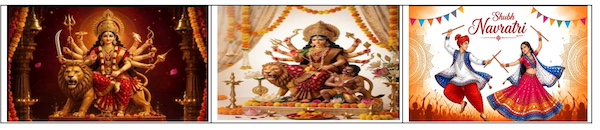
नमस्तस्यै नमस्तस्यै नमस्तस्यै नमो नमः ॥”
You may also access this article through our web-site http://www.lokvani.com/
