Contribute
| When Time Takes Shape: Ananya Magesh's Margam |
Amrutha Ananth
10/01/2026
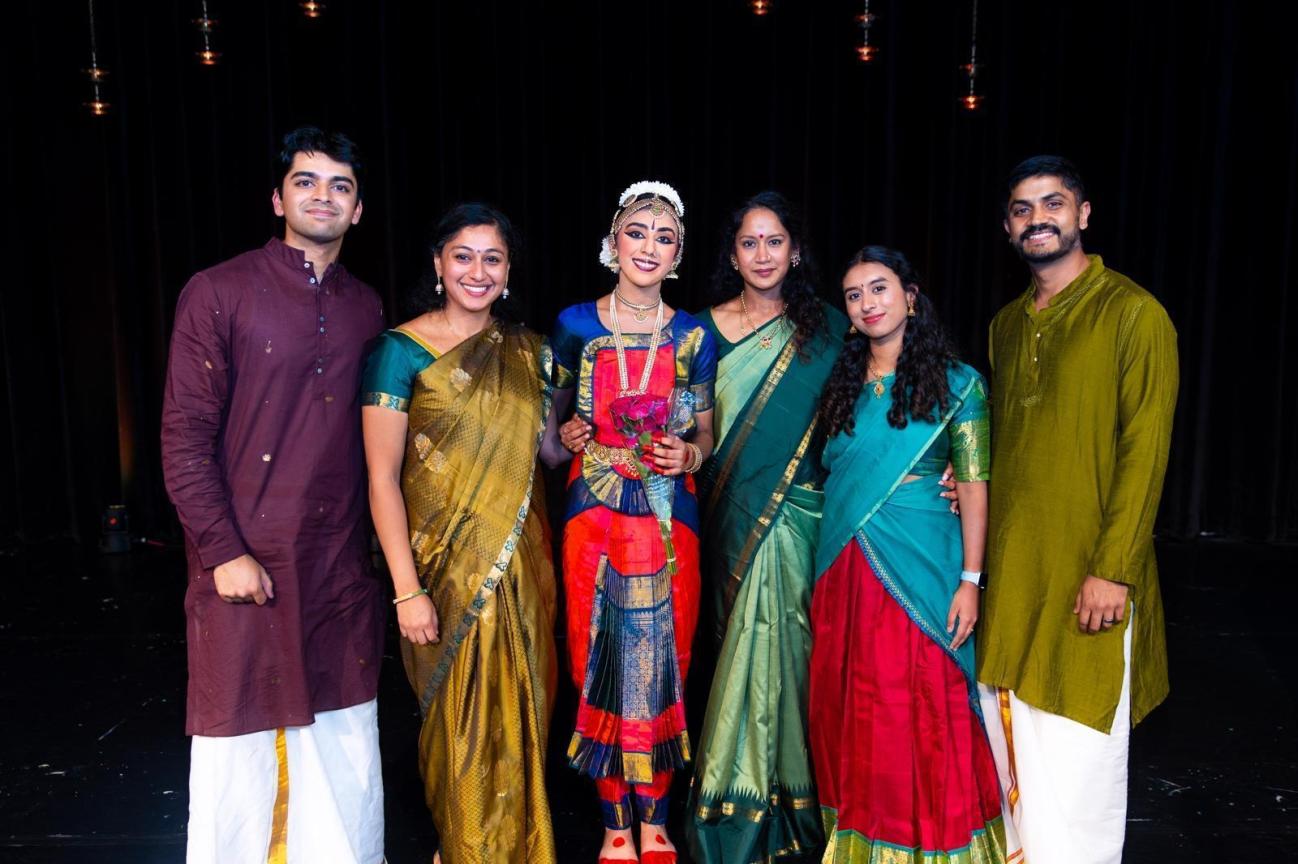
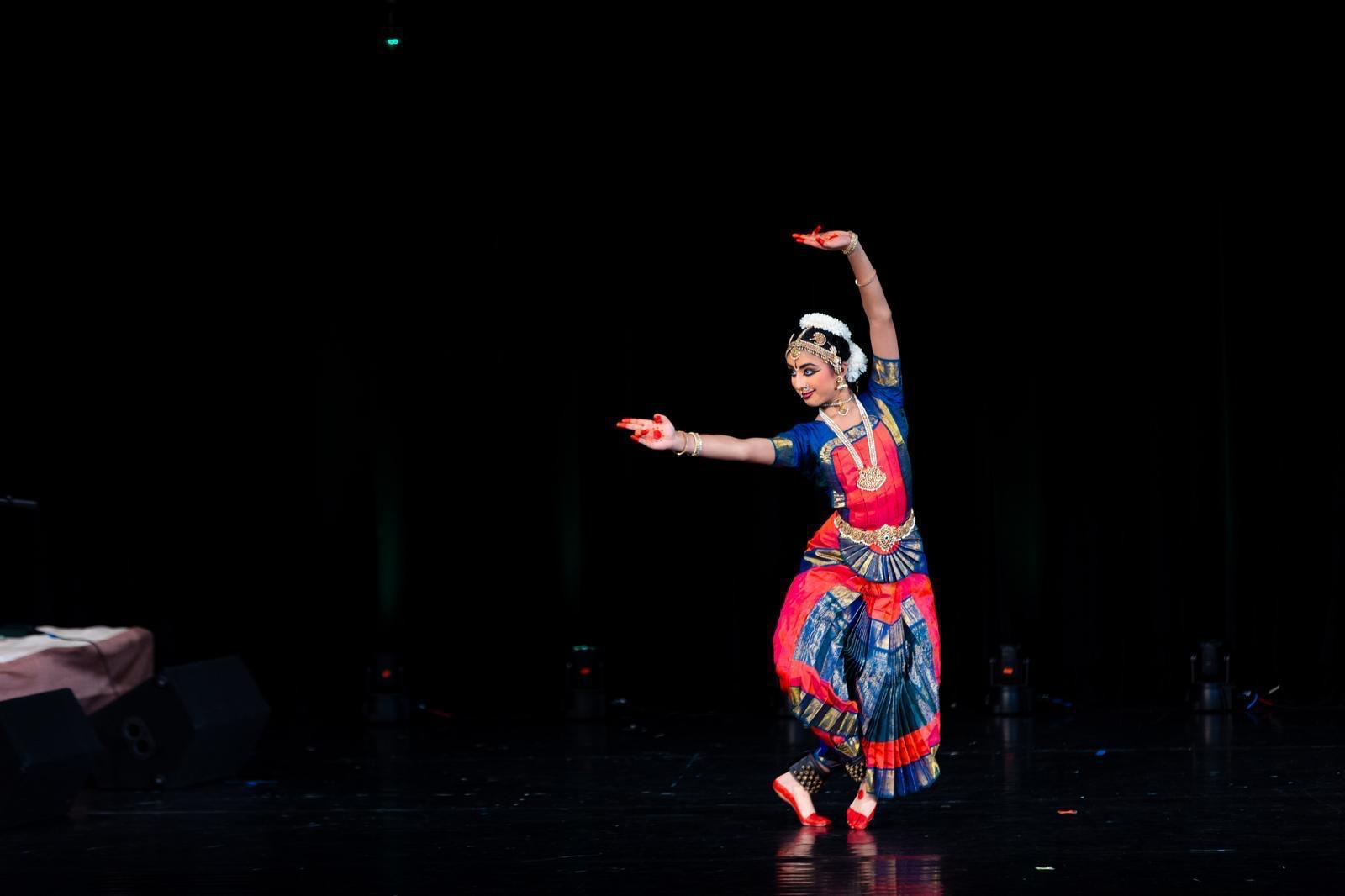
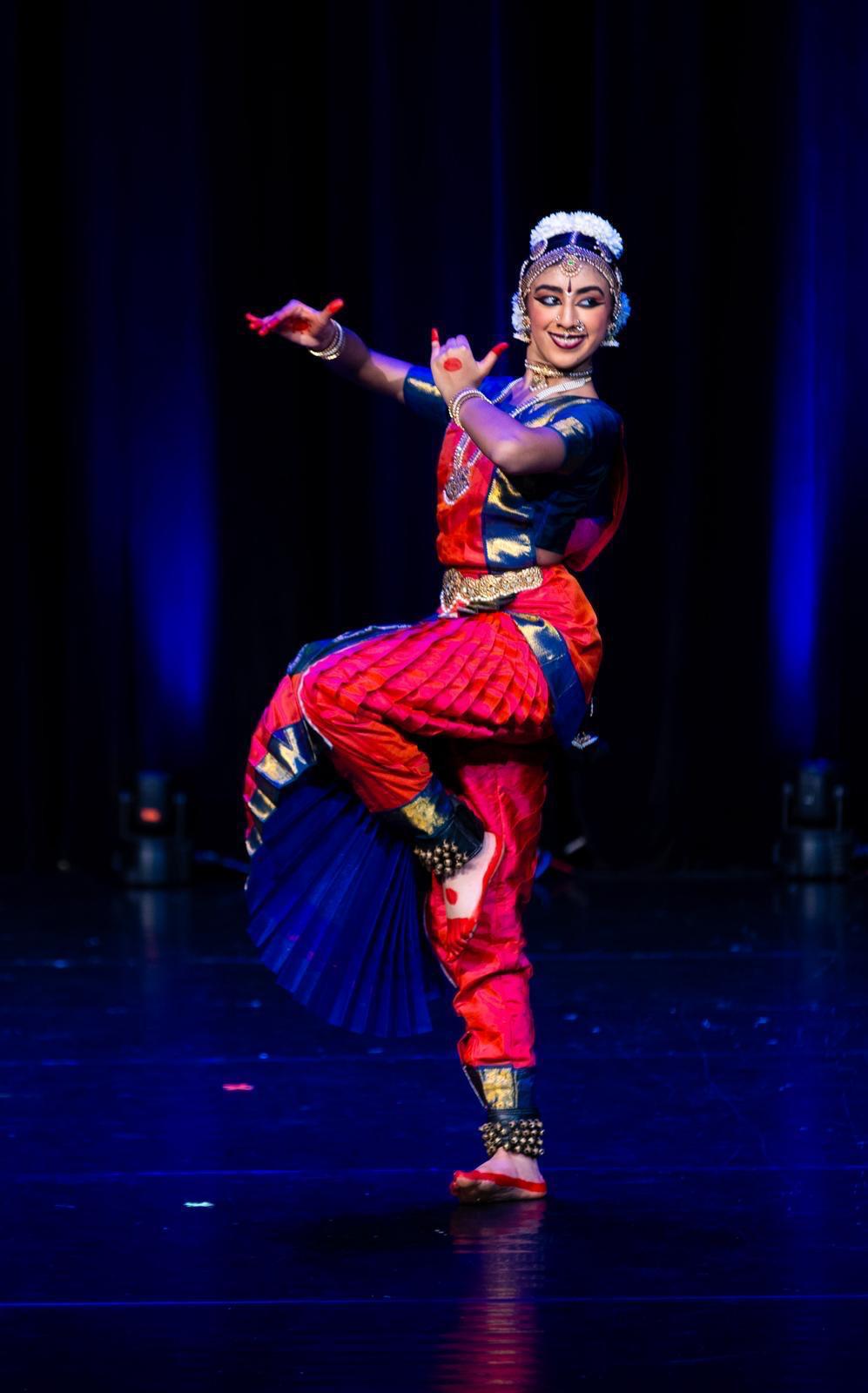
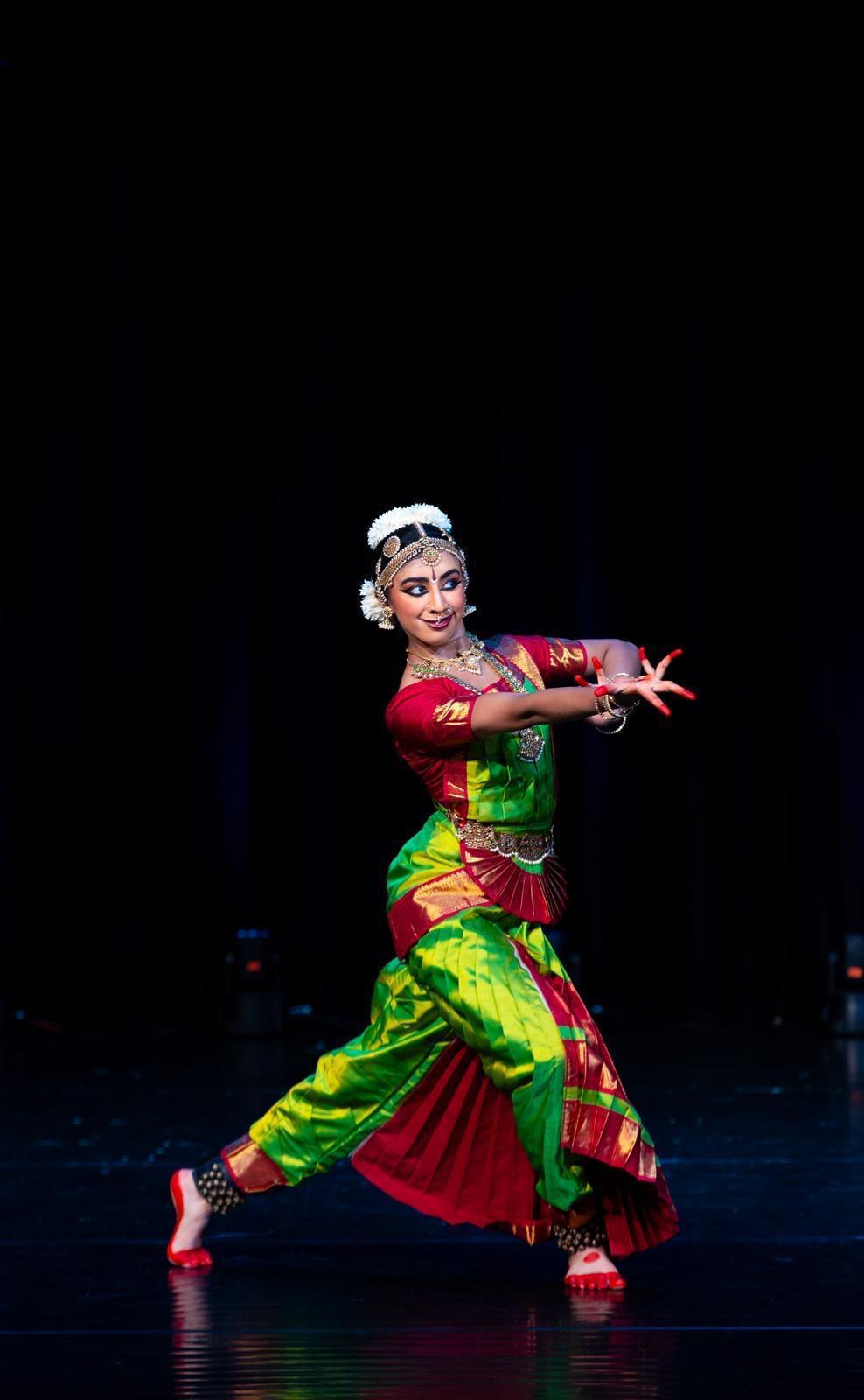
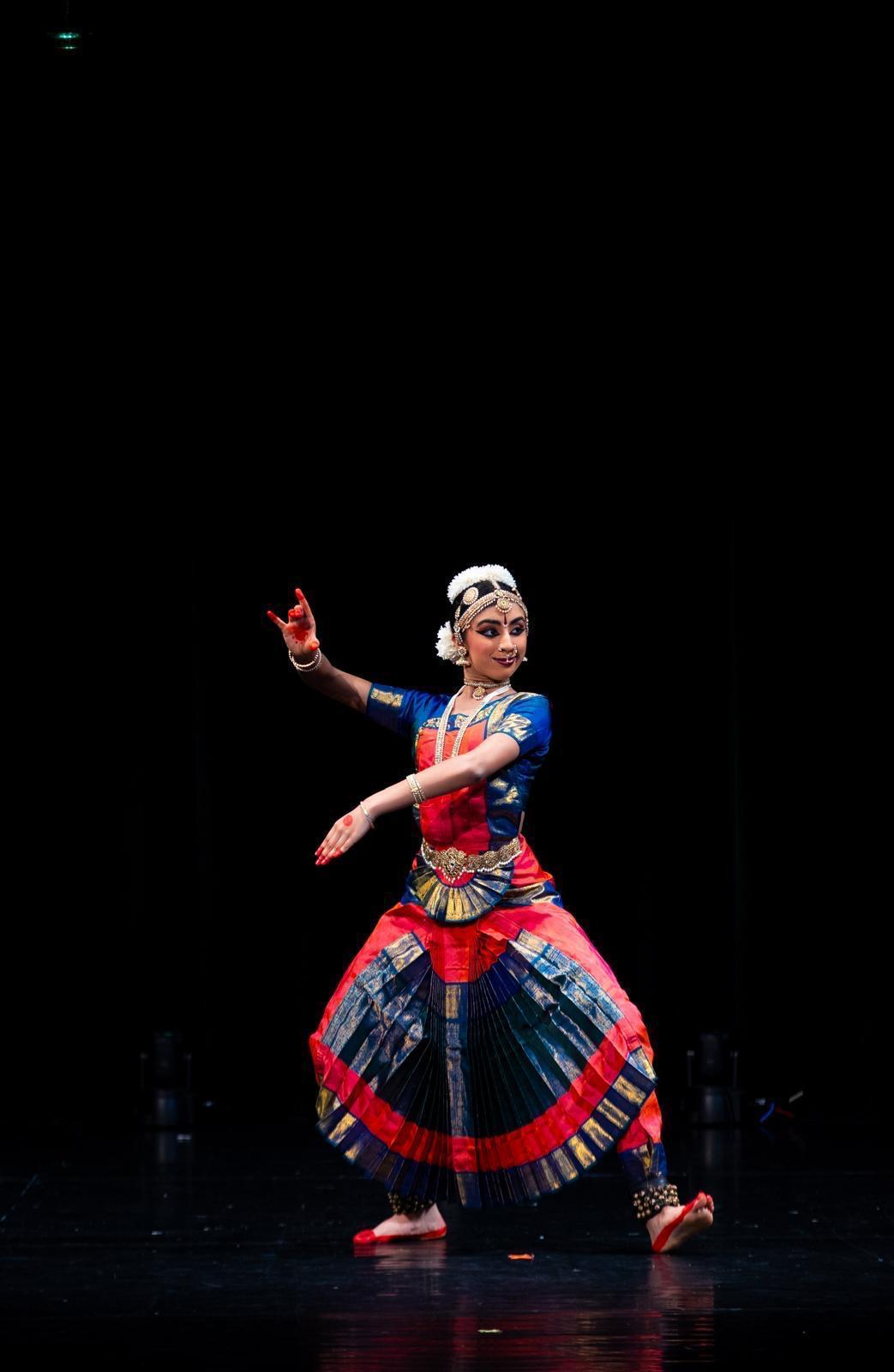
When Time Takes Shape: Ananya Magesh's Margam I first saw Ananya Magesh in August 2023 at her arangetram, when the stage carried the anticipation of a beginning. Three years later, watching her perform a full margam, I became aware of a different measure of growth. The changes were not merely technical. They appeared in the confidence of her pauses, the clarity of her rhythmic choices and her willingness to let a moment unfold before moving on. I was no longer watching a young dancer full of promise, but an artist beginning to inhabit that promise with conviction. For me, this margam became a meeting between then and now. The distance between those two performances prompted me to think about kaalam, the Tamil word for time, and the many forms it assumed across the evening. This was not an idea announced by the program. Rather, it emerged gradually through the repertoire itself: time beyond beginning and end, time measured through tala, time renewed through Shiva's dance, time preserved through Krishna's stories and time made visible through motion. By the end of the recital, these different dimensions of kaalam seemed to converge in Ananya's own artistic journey. Kaalam: Beyond Beginning and End The opening Aarabhi Pushpanjali, "Jem Jem Thanana," set in Adi Tala and composed by Dr. M. Balamuralikrishna, offered the evening its first meditation on time. Its invocation of Ganesha as Adyanta Rahitha, the one beyond beginning and end, placed the performance under the protection of the timeless. There was a quiet irony in opening a recital with a deity described as being beyond both beginning and end. A performance unfolds within the strict boundaries of clock time, yet its purpose often lies in directing attention beyond those boundaries. The composition captured that paradox beautifully. Ragam Arabhi's bright, auspicious spirit made for an inviting opening, and Ananya matched it with dancing that was both elegant and composed. Traditionally, a pushpanjali is an offering to the stage, the deity and the audience. Here, however, it felt like something more: the moment a performance awakens to itself. Through clean lines, measured movement and an unforced stage presence, Ananya guided the transition from invocation to artistry with ease. The opening item also established a theme that would quietly return throughout the margam: the relationship between the finite and the eternal. Kaalam: Measured Through Tala The varnam in ragam Sriranjani, Saravana Bhava Guhane, composed by Madurai Muralidaran and choreographed by Acharya Aishwarya Balasubramanian, explored time in a more tangible form. Set in Trishra Dhruva Tala, an eleven-beat cycle, it made time feel subtly asymmetrical, continually turning and resisting predictability. In contemporary Bharatanatyam performance, audiences often encounter the reassuring symmetry of Adi Tala. Trishra Dhruva brings a different experience. Its structure creates a gentle tension beneath the surface, making each point of resolution feel earned rather than expected. That underlying architecture gave the varnam much of its vitality. The complexity of the tala never appeared as complexity for its own sake. Ananya negotiated its shifting contours with a confidence that allowed the audience to experience its flow rather than its mathematics. The thrikala jathi deepened this experience through three distinct speeds, accompanied by evocative peacock motifs appropriate to Muruga. Yet the passage succeeded not because of speed alone, but because Ananya preserved the internal geometry of the choreography as the tempo changed. The lines remained clear, the araimandi stable and the tala never yielded to mere athleticism. The sanchari segments traced Muruga's many dimensions: the playful old-man disguise employed in the pursuit of Valli, the destruction of Surapadman and the transmission of spiritual wisdom to his father through "Pranava Porulai Uraithu." Ananya kept each episode sharply defined, moving with ease between playfulness, heroism and transcendence while ensuring that the character remained recognizably the same deity throughout. Aditya Venkatesh sustained the emotional arc of the varnam with singing that remained both energetic and sensitive to the needs of dance. From the charanam, beginning with "Pattrinen Padamalar Ninai," the performance acquired an added intensity. The sangatis seemed to propel Aishwarya's choreography forward, while Ananya’s movement in turn revealed details within the melodic contours. Particularly striking was the consistency of the arudhi. Tarun Shriram, accompanying dance for the first time, held the kalapramanam with remarkable assurance. Voice, mridangam and movement converged at points of resolution with a precision that allowed the complexity of the tala to remain intelligible. Particularly impressive was Ananya's ability to maintain clarity without sacrificing ease, a balance that often distinguishes developing dancers from mature performers. The lyrical craftsmanship of the composition also came through clearly. In phrases such as "Pattrinen, Ottrinen, Nattramizh, Vetrivelane," the composer draws upon the sonic richness of classical Tamil, where alliteration and phonetic symmetry become expressive devices in their own right. The repeated consonantal patterns create an intrinsic rhythmic flow, allowing the sahitya to participate in the architecture of the tala rather than merely sit upon it. Likewise, "Panniru Karam Udaiyone, Venniru Puram Udaiyone, Mann Valar Arupadaiyone, En Manam Irundharulone" accumulates power through echo and repetition, allowing lyric, rhythm and choreography to unfold as a single continuous thought. Here, Ananya made kaalam audible through rhythm and visible through movement. She moved between measured restraint and accelerating energy while never losing sight of the underlying pulse. What impressed was not velocity, but authority over velocity: the ability to gather momentum, release it and arrive exactly where the music demanded. Kaalam: Eternal Renewal Natanam Adinar, the beloved composition of Gopalakrishna Bharati in ragam Vasantha and Khanda Jathi Ata Tala, offered another perspective on time. The piece has long occupied a cherished place in the Bharatanatyam repertoire. Performers as far back as Kumari Kamala's generation were known to include it in their concerts, and its presence on stage across decades speaks to its remarkable durability. Few Bharatanatyam works have remained so consistently alive while continuing to invite fresh interpretations. Ananya's interpretation drew strength from the work's central image: Shiva's dance as both an event and an eternal principle. The anupallavi situates that dance with remarkable specificity: "Thai Maasathil, Guru Poosathil, Pagal Nerathil." A particular month, a particular star, a particular hour. Few compositions locate the cosmic within the calendar so explicitly. In the context of this margam's exploration of kaalam, the lyric is especially striking because it grounds Shiva's universal dance in a precise moment before allowing it to expand into eternity. Time is simultaneously specific and boundless, marked on a calendar yet extending far beyond it. Ragam Vasantha contributes meaningfully to this effect. Its brightness is tempered by introspection, making it uniquely suited to a composition poised between celebration and contemplation. Harshini Magesh's singing provided a strong devotional foundation, while Ananya's interpretation found its strength in the relationship between stillness and release. Her transitions between sculptural poses and vigorous movement suggested not a sequence of isolated images, but an ongoing process of becoming. The pauses were especially effective. Rather than interrupting momentum, they gave the music room to resonate and heighten the impact of what followed. As a result, Shiva's dance felt less like spectacle and more like an act of perpetual renewal. Kaalam: Krishna's Return Across Time In Govardhana Giridhara, composed by Narayana Teertha, time took on a narrative dimension. Ananya approached the piece patiently, allowing each image to settle before proceeding to the next. That measured unfolding gave the abhinaya a quiet authority. Narayana Teertha's Krishna compositions occupy a distinctive place in the dance repertoire because they function simultaneously as narrative and devotion. The stories matter, but they are ultimately vehicles for bhakti. Each episode becomes another way of encountering the divine. Through Ananya's interpretation, Krishna emerged not simply as a mythological figure but as a recurring presence across time. The lyrics recalled him as protector and redeemer: "Bhavaka Bhaya Hara, Paahi Mukunda." The reference to Gajendra Moksham revealed the deity who rescues the distressed devotee. Draupadi's disrobing recalled the unseen intervention that arrives when all worldly aid has failed. Viewed together, these stories achieved something larger than narrative continuity. They suggested a deity who repeatedly enters history without ever being confined by it. Unlike the linear progression of history, devotional time in Krishna literature often folds in upon itself, allowing events separated by ages to coexist within a single act of remembrance. The centuries separating Gajendra, Draupadi and the devotees who continue to sing these songs collapsed into a single devotional present. What made the abhinaya particularly persuasive was Ananya's refusal to rush emotional transitions. Whether portraying rescue, wonder or devotion, she allowed each mood sufficient space before moving to the next, giving the narrative a sense of lived experience rather than demonstration. The phrase "Natya Rasothkata, Naana Bharana" opened another dimension. Here the choreography embraced dandiya raas-leela movements, transforming the description of Krishna adorned with many ornaments into a lively and communal image. The shift from contemplative storytelling to collective celebration refreshed the composition without disrupting its devotional core. Harshini Magesh navigated these transitions with admirable sensitivity, moving between intimacy and expansiveness with ease. Smitha Krishnan's violin provided elegant melodic embellishment, enriching the music while remaining firmly in dialogue with the vocalist and dancer. Kaalam: Time as Motion The recital concluded with a duet thillana in ragam Ahir Bhairav, composed by Dr. M. Balamuralikrishna and presented through the combined voices of Aditya Venkatesh and Harshini Magesh. As with much of Acharya Aishwarya Balasubramanian's choreography, the nuance lay in making the music visible without reducing it to illustration. Ananya was at her most assured in the swara sequence "SRGMPDNS SNDPMGRS," where the choreography demanded both precision and elasticity. The ascending and descending phrases became a study in changing velocity: beginning with measured restraint, gathering momentum and then turning back, not as repetition but as transformation. In tracing the architecture of the swara passage, Ananya made changes in pace feel tangible, allowing the audience to experience time not as a fixed measure but as something that could expand and contract within the framework of tala. That idea found its most memorable expression in the repeated use of alapadma and katakamukha. Opening and closing in rotation, the mudras travelled through the arms like the hands of a clock circling an unseen dial. The gesture repeatedly returned to familiar positions, yet each return carried it forward into a different moment, much as time revisits the same markers without ever truly repeating itself. In that brief choreographic image, swara, tala and kaalam converged, making the passage of time visible through movement itself. The thillana therefore functioned as more than a conventional finale. Its speed was disciplined by rhythm, and its circularity offered the evening's clearest image of time: advancing, returning and never truly repeating itself. When Time Takes Shape A margam is often described as a journey, but this performance suggested something slightly different. It revealed how a dancer is also shaped by the journeys already travelled. Between the promise evident at her arangetram and the assurance visible in this recital lies the slow work of years. That journey could be sensed in the confidence of her arudhis, the clarity of her rhythmic choices and the patience with which she allowed moments to unfold. In the end, kaalam revealed itself not merely as a theme running through the repertoire, but as the unseen force that had shaped the artist standing before us. The margam traced many kinds of time, cosmic, rhythmic, mythic and musical, but its most compelling expression was Ananya herself.
You may also access this article through our web-site http://www.lokvani.com/