Contribute
| Reflections On Madhumita Nambiar’s Natanam Madhuram |
Suryaa Ramaswamy
10/01/2026
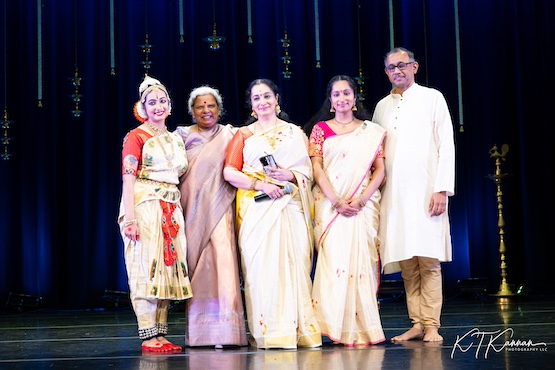
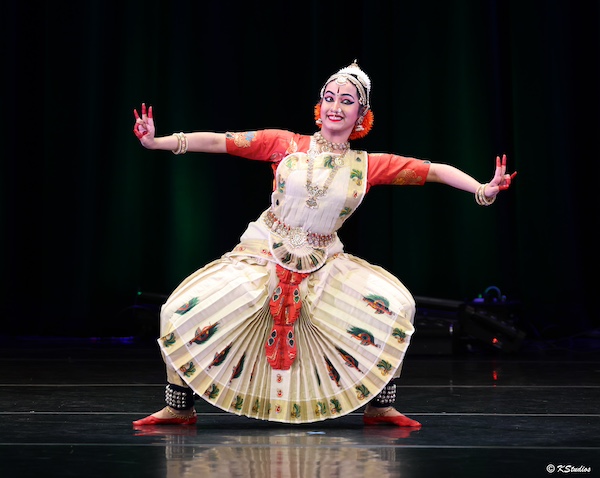
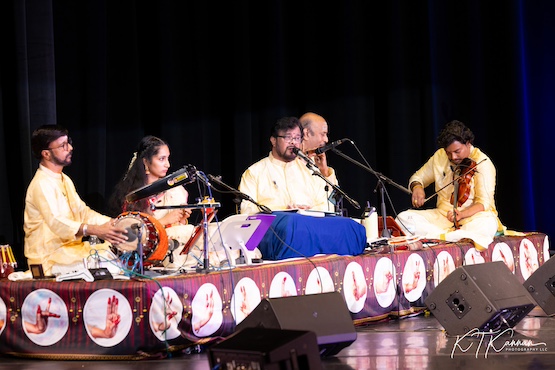
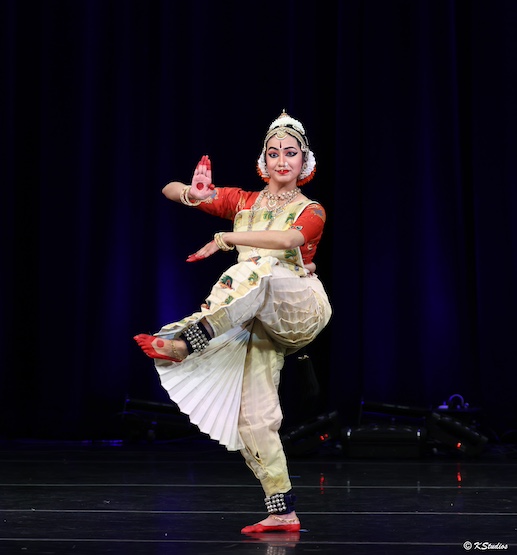
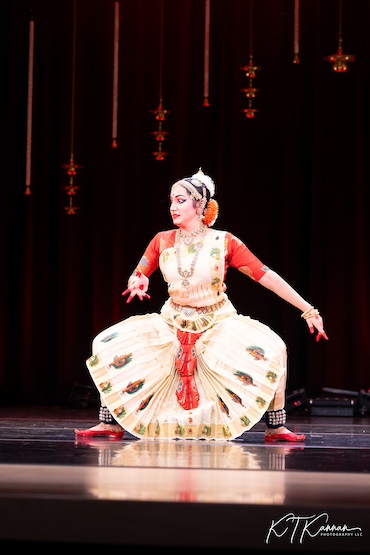
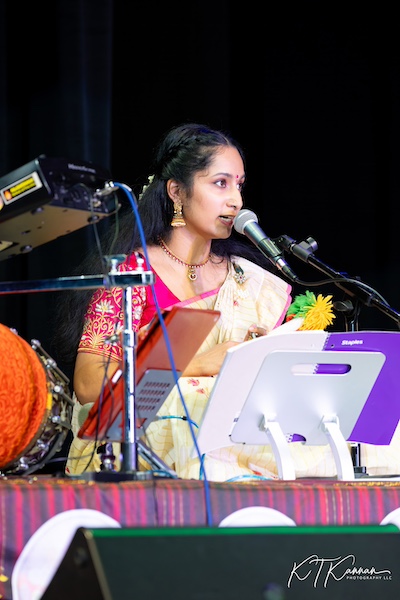
Reflections on Madhumita Nambiar’s Natanam Madhuram By Suryaa Ramaswamy I still remember the first time I saw Madhumita Nambiar dance. I had gone to the Lasya School of Dance’s studio to inquire about classes. An evening class was still in progress, and a window separated the waiting area from the studio. I happened to look through it and saw a group of girls dancing. She was clearly the youngest of the lot, yet somehow impossible to overlook. I found myself watching her far more than I was watching anyone else. Unfortunately, or perhaps fortunately, because of some timing constraints - I joined that very class. I remember standing behind her, trying to follow my own steps while continually being drawn to hers. There were moments when I would simply stop, watch, applaud, and wonder what exactly I was doing in the same room as this little girl. That was Madhumita at fourteen. I remember being told that she had completed her Arangetram the previous year, and thinking: How could someone possess this degree of command at such a young age? About nine years later, I had the privilege of watching her perform a full margam, this time - her 10th Arangetram anniversary performance on September 12, 2026 at the beautiful Doherty Memorial High School Auditorium. What unfolded on stage was not simply a celebration of a decade since her debut, but a portrait of a dancer who had grown enormously in both technique and expression. The evening opened with an Alarippu choreographed by her talented sister Nilanjana, bringing alive the story of Muruga through the rhythm of an alarippu, followed by a Kali Kowthuvam choreographed by Madhumita herself. There were distinct hallmarks of her mother, Guru Sapna Krishnan’s choreographic style, yet she left no stone unturned to make the piece challenging for herself. But of course, the choreographer knew precisely what the dancer in her was capable of! Then came Silappathikaram - the unquestionable masterpiece of the evening. Kovalan falling beneath the executioner’s sword. Kannagi grieving and bawling at the death of her husband. Kannagi standing before the king, confronting him with the anguish and fury of a woman who has been wronged. Madhumita did not merely portray these characters; for those moments, the dancer seemed to disappear entirely, leaving only the characters before us. The grief was palpable. The anger was visceral. The injustice was almost tangible. The audience seemed to hold its breath. It was here that her evolution became most evident. The power that had always been so distinctly hers was now tempered by grace, restraint, and extraordinary sensitivity. She moved with equal conviction between tenderness and fury, vulnerability and strength, grace and raw emotion. Then came Chaliye Kunjanamo, a piece I had heard Madhumita wanted to perform at her original Arangetram but had consciously set aside because she felt she was too young to fully embody its nuances - the love, playfulness, mischief, and tenderness between Krishna and Radha. Ten years later, the decision to wait felt almost serendipitous. Shambhu Natanam brought her back into familiar territory - fast, vigorous, and exhilarating. The jumps, turns, and single-footed spins carried that unmistakable energy and unbelievable precision that has always been a hallmark of her dancing. The keerthanam on Guruvayoorappan shifted the mood again, drawing the audience through a succession of stories, each revealing another facet of the divine and carrying its own emotional color - tugging at our heartstrings through the wondrous ways of the Lord. For a moment, I was in absolute awe, wondering how the same dancer who portrayed Kannagi in full sway just minutes ago was now the elderly Kururamma walking with the exact gait of an old woman or the paralysis-stricken Bhattathiri. But then, that is precisely what extraordinary artists are capable of. And then came the Thillana - a fitting conclusion. She danced with the lightness of a peacock, joyful and completely at ease. For a few final minutes, I saw the same carefree, happy-go-lucky Madhu I had known all these years. And then the music ended. The dancer who had made everything look effortless stood in tears. As she embraced her guru, who is also her mother, and tried to hold back her tears, the sheer effort behind the evening suddenly became visible. One could sense how much she had invested in this performance - not only physically, but emotionally and artistically. Every movement that had appeared so effortless that evening had been earned through discipline. Power, precision, and presence have always been her strengths. But now there is something more - a depth, a deeper sensitivity that comes from growing as a person and as a dancer. The last time I remember seeing such an evolution was at her sister Nilanjana Nambiar’s dance recital, Upasana. It was therefore especially meaningful to see the soft-spoken, humble, delightfully talented Nilanjana on stage again - not as a dancer or a singer this time, but as a debut nattuvanar. Wielding the cymbals for her sister with immense power, poise, and confidence, she aced the complex jathis with striking effortlessness. Nilanjana was anchored by a stellar live ensemble: Sri Sudev Warrier’s rich, evocative vocals, Sri Nagarajan Shanmughalingam’s crisp mridangam, and the soulful, melodic exchanges between Sri Anandhu Lal on violin and Sri Thiagarajan Ramani on flute. I found myself thinking about their parents. What must it feel like to sit in an audience and watch both your daughters take the stage, each so remarkably accomplished in her own right? There are dreams that parents carry quietly, without ever knowing whether they will one day become reality. Watching both daughters find their way to a stage like this must surely be one of those rare, deeply cherished moments. Perhaps what makes their achievement even more remarkable is the life they have built beyond the stage. Of course, full-time professional artists train to deliver performances of this caliber every single day. But the reality for these girls is entirely different - they navigate demanding full-time lives, studying, working, and building careers far away from where this art form originated. Yet on stage, they commanded the art form with the rigor, depth, and mastery of seasoned professionals. To sustain that level of artistic excellence alongside full-time professional lives requires a truly rare kind of devotion. Madhumita also chose to extend that sense of purpose beyond herself, performing this anniversary recital in support of CRY America while pursuing her professional life as a researcher at Boston Children’s Hospital. There is something deeply meaningful about a life in which both one’s profession and one’s art become avenues for giving back. And then came my favorite review of the evening. On the way home, my 7-year-old daughter, who can barely sit through a full recital, declared that she had to write something important in the guest book. I naturally had to peek. She had written “Dear Madhu Akka - You are a dance wizard. I really hope and wish you become famous one day!”. It was perhaps the simplest review of the evening, but the truest reflection of how a lot of us felt. Well Aadhya, I hope so too! From the girl I first glimpsed through a studio window at fourteen, who distracted me so completely from my own dance steps, to the young woman who held an entire audience spellbound a decade later, the journey has been extraordinary to witness. What a journey, Madhu! And what a privilege to have watched a small part of it from the very beginning.. Credits: Photography : Beji Joseph, Kannan Kathiresan, Ramakrishnan Varadhan, Srikumar Ramani, Vidyaprakash Ramaraju Videography: Manoj Panicker Audio: Sathish Movvar Lights: A&A lighting Event Decor: Anitha Athipathy Make up: Anu Metra Chief Guest: Smt. Ranjani Saigal
You may also access this article through our web-site http://www.lokvani.com/