Contribute
| Carnatic Music Arangetram: Janya & Medha Ramachandran |
Rayadurgam Ravikanth
09/25/2026
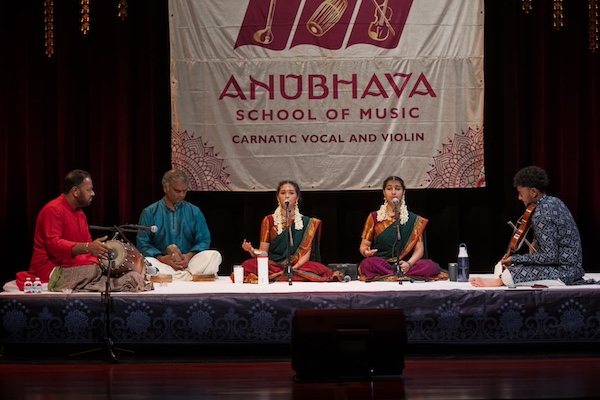
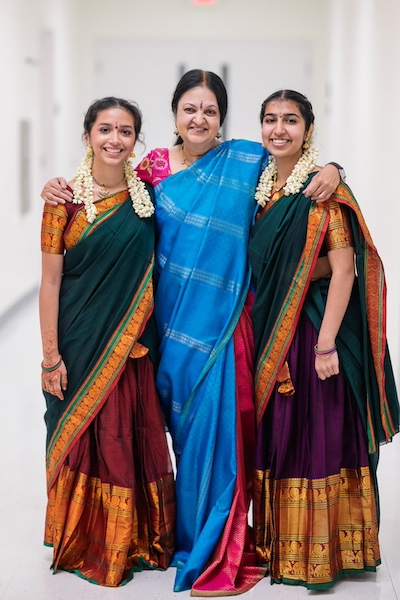
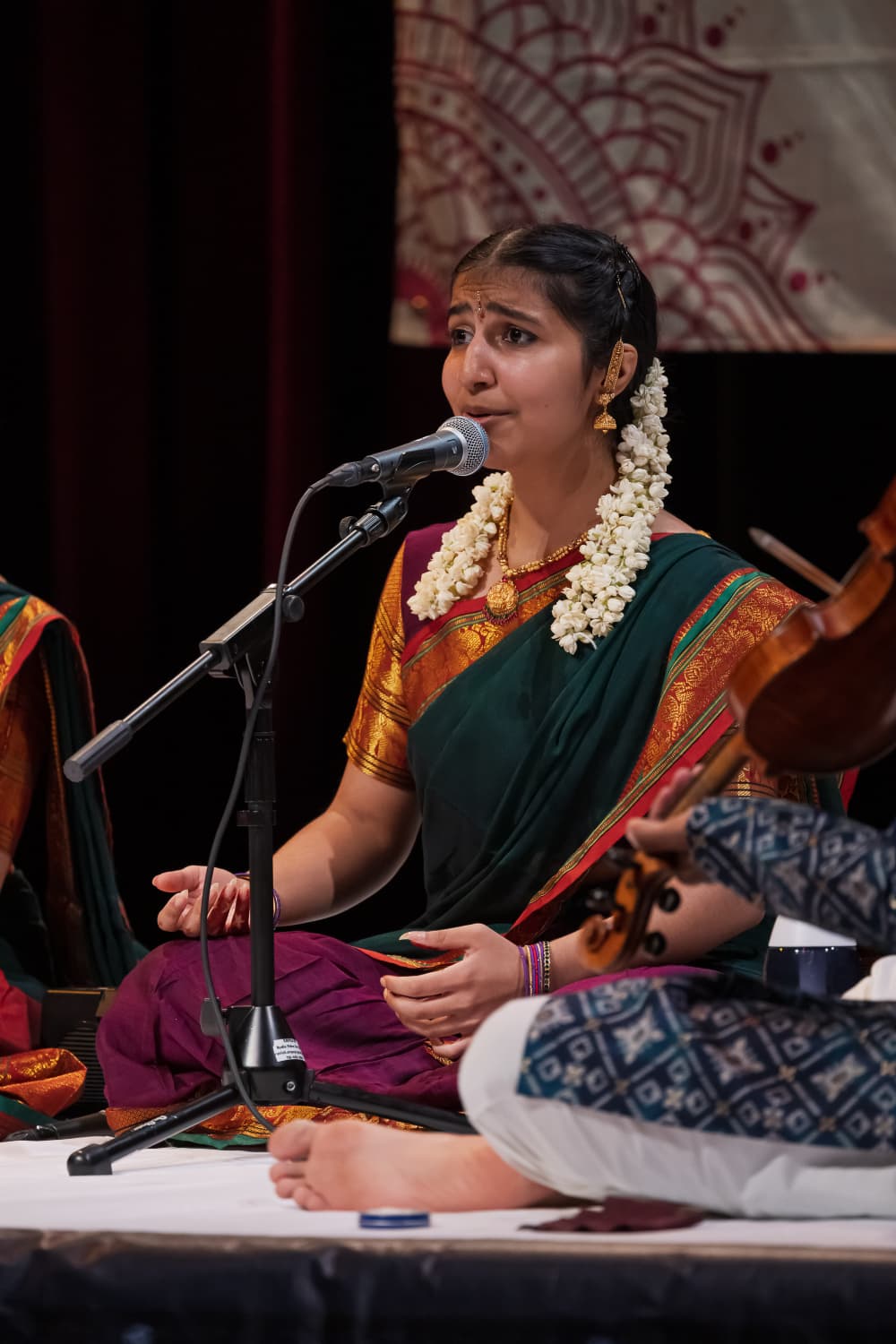
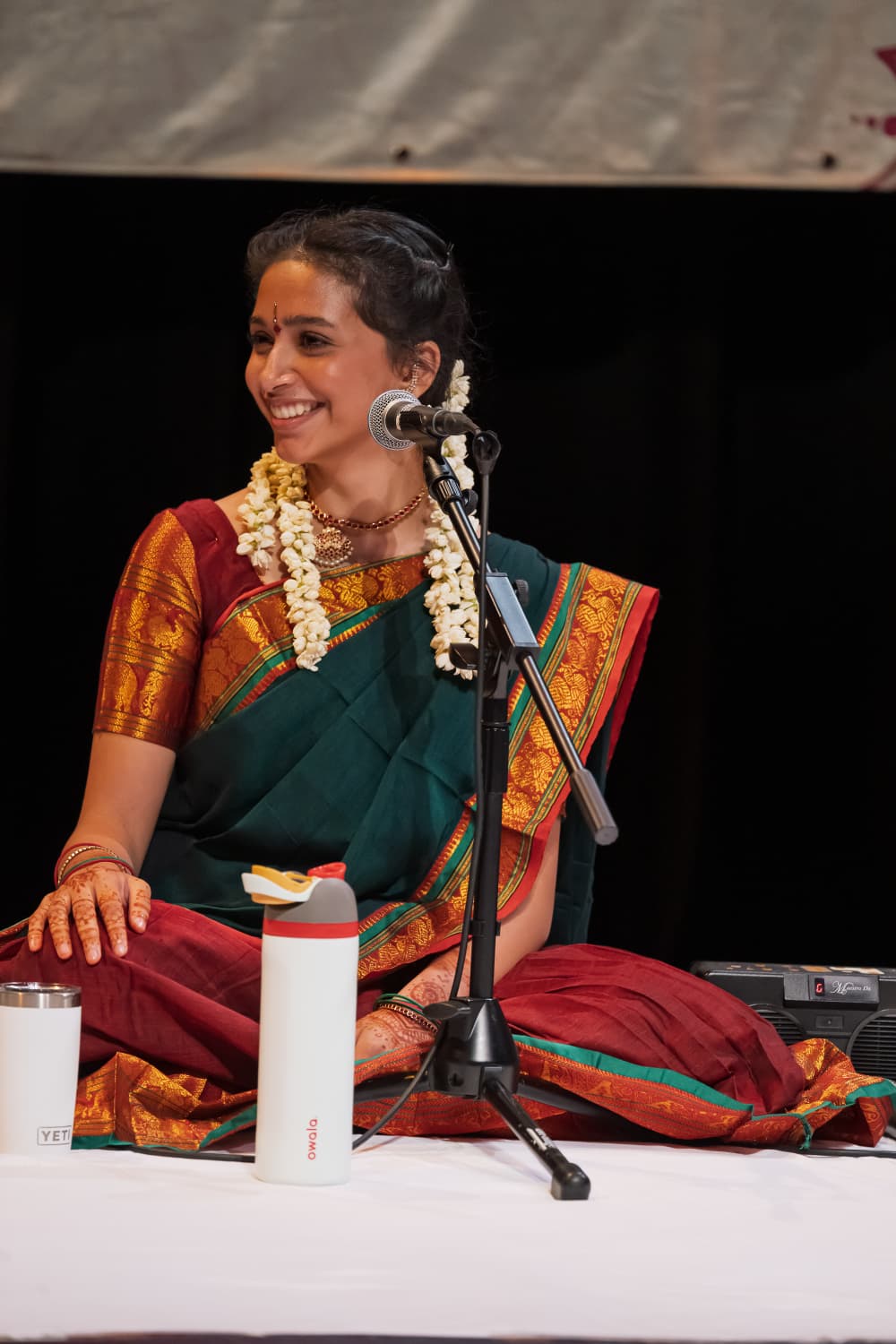
Carnatic Arangetram of Janya & Medha Ramachandran Arangetrams of Guru Tara Bangalore’s students have always been of the highest quality, with her students displaying an amazing level of skill and understanding of Carnatic music. The arangetram of Janya and Medha Ramachandran was yet another exceptional concert, highlighted by a specific accomplishment that has never been seen in the Boston area and may not be seen again for a long time. But more on that later. Janya and Medha kicked off the concert with the pada varnam in Karnataka Kapi, a composition of Maharaja Swati Tirunal. The pallavi and anupallavi were rendered with great feeling, befitting the lyrics. The chittaswarams were rendered dynamically, showcasing their ability to transition from a relaxed tempo to a lively one while establishing their grasp of layam. Right from the outset, the chemistry among all the artistes on stage was palpable, with the percussionists’ interludes between phrases accentuating the music and adding to the overall experience. Next was Vidwan T. V. Gopalakrishnan’s composition Sundara Vinayaka in the rare raga Ragavardhini. The devotional nature of the composition was brought out beautifully while retaining the characteristic weight of the vivadi raga. Janya and Medha, along with Yash Ravish on the violin, ornamented the piece with swarams that flowed with great fluidity, bringing it to a lively conclusion. The sisters then presented Syama Sastri’s legendary kriti, Marivere Gati Evaramma, in Anandabhairavi, capturing the deep sense of bhakti and pathos inherent in the sahitya. It is never easy to take on such an iconic composition, immortalized through the renditions of great masters. Their mellifluous and deeply emotive presentation drew the audience into the mood of the composition and left them thoroughly immersed. For the sub-main piece of the concert, Janya and Medha presented Saint Tyagaraja’s Paripurna Kama in raga Purvikalyani. Janya began the alapana with a serene and contemplative exposition, exploring the nuances of the raga in the lower octave before gradually building toward the upper register, where Medha took over. Medha’s exploration of the upper register, interspersed with faster phrases, provided both a delightful contrast and a natural continuation to Janya’s alapana. Yash essayed a delightful response, exploring the intricacies of Purvikalyani in a succinct yet complete fashion. The kriti was rendered with sensitivity, reflecting the composer’s appeal to his deity, couched as it is in the form of an admonishment. The line “sAkEtadhIpa nI mukha sarasIruhamu jUpi” was chosen for niraval, as the sisters improvised on the line in both lower and upper kalams. This was followed by a dynamic exchange of swarams between the sisters and Yash. Their rock-solid grasp of layam was evident as they effortlessly interwove kalpana swarams in different nadais and speeds. Yash was more than equal to the task, as the three of them brought the piece to a rousing conclusion. Saravanabhava, a composition of Muthiah Bhagavathar in raga Pasupathipriya, was rendered at a lively tempo. Janya and Medha negotiated the tongue-twisting lyrics and intricate chittaswarams at a rapid pace while maintaining precise diction. The joyful energy of the composition provided a perfect prelude to the main piece that followed. The main piece of the concert was in the popular raga Mohanam. Medha began the alapana, exploring the lower register with dynamic and aesthetically pleasing phrases as she gradually built toward the upper octave. Janya focused primarily on the upper register, but put her own stamp on the alapana with an equally pleasing, more relaxed exploration. The contrast between their approaches was an excellent illustration of how the same raga can take on different dimensions through the imagination of the artistes. Yash’s response perfectly complemented the vocalists as he too explored the lower and upper registers with mellifluous and nuanced phrases suffused with bhava. This was followed by a melodious rendition of Muthuswamy Dikshitar’s Narasimhagaccha. The audience was transported as the singers perfectly captured both the composer’s appeal to the deity and his descriptions of the deity. The niraval at the madhyamakala line “Murahara…” was invigorating, as the joy of Mohanam shone through. This was followed by a bhava-laden exchange of free-flowing swarams among Janya, Medha and Yash. The piece as a whole was immensely satisfying, bringing out the many moods of Mohanam—joy, serenity and devotion—in wonderful balance. The tani avartanam in Misra Chapu was a spirited exchange between Tarun Bangalore on the mridangam and Sri. Siva Ponnudurai on the kanjira. Moving through contrasting rhythmic patterns and variations in speed, the two percussionists built the tani with increasing intensity, their interplay becoming progressively more animated as they approached the finale. The energetic conclusion drew an enthusiastic response from the audience, a fitting acknowledgment of an engaging and thoroughly enjoyable percussion interlude. Before launching into the Ragam Tanam Pallavi, the sisters presented the popular Tyagaraja composition Vara Narada in Vijayasri. The fast-paced sangatis were executed with precision, supported in complete synchrony by the accompanists. The brisk and energetic rendition perfectly set the stage for the piece de resistance that was to follow. The chosen ragam for the Ragam Tanam Pallavi was Thodi. Janya began with a patient and unhurried exploration of the lower and middle registers, bringing out the depth and beauty of the raga through some particularly pleasing and weighty phrases. Medha picked up from where Janya left off and gradually moved into the upper registers, building to an expressive climax before making her way back down. What was particularly impressive was how naturally the two complemented each other, giving the alapana a sense of continuity and completeness. Yash’s response was equally brilliant as he explored the full expanse of Thodi. His exploration was an exquisite mix of weighty Thodi phrases presented with incredible freshness, equal to anything one would hear from leading professionals. The tanam had a wonderful build-up in energy, with Janya and Medha weaving together rhythmic phrases that often had delightful and unexpected turns. What made it particularly enjoyable was that the rhythmic variations never felt systematic or predictable, but flowed naturally with the melody. Yash responded with a robust tanam that beautifully forged together the melody with free-form layam. The exchanges between the sisters and Yash became increasingly energetic and brought the tanam to an exciting conclusion. A typical pallavi is set to a specific tala with intricate laya patterns, challenging the artistes to innovate within that framework. In this case, the sisters were embarking on an Avadhana Pallavi involving four talams. On the right hand were Chathusra Jati Rupaka talam and Khanda Jati Matya talam, while on the left were Misra Jati Triputa talam and Khanda Jati Rupaka talam. The original pallavi, a composition of Sri T. R. Subramaniam in Chathusra Rupakam (tisra nadai), had been adapted to this Avadhana structure by leading musicians Smt. Sriranjani and Smt. Shruthiranjani. To say that there was palpable surprise and excitement in the audience may be the understatement of the year. As the pallavi began, it was mesmerizing and awe-inspiring to watch the sisters maintain two different talams each, one on each hand, perfectly in sync with each other throughout. To do this while delivering the pallavi with utmost melody and with panache was an accomplishment the likes of which has not been seen in Boston for a while and probably will not be for a long time. The niraval and trikalam were handled with creativity, with the melody of the majestic Thodi always remaining the guiding light. This was an excellent example of how technical complexities, while remarkable in their own right, can be seamlessly meshed with the bhava of the composition to elevate the listening experience. The Thodi swarams and the ragamalika swarams flowed in torrents as the sisters and Yash wove a tapestry that transported the audience into an otherworldly experience. The audience’s response was ample proof of both the enormity of the artistes’ accomplishment and the extraordinary experience they had created. The post-Ragam Tanam Pallavi session consisted of a garland of melodious compositions: Krishna Gokuli Janmala by Sant Tukaram, Thikku Teriyada Kattil by Bharathiyar, English Notes by Muthiah Bhagavathar, and a tillana in Purvi by Tirukkonam Vaidhyanatha Bhagavathar. Janya and Medha put their own stamp on the Carnatic music scene in Boston with their debut concert that will be remembered for a long time. The concert as a whole reflected their intense hard work and the highest quality training provided by their esteemed Guru, Smt. Tara Bangalore. It was obvious that they have imbibed the nuanced fundamentals of Carnatic music, and in executing the complex pallavi they showed how they could bring all that melodic and rhythmic understanding and training together in an outstanding and unique performance. Best wishes to the debutants as they move forward in their musical journey under the guidance of their Guru. There aren’t enough superlatives to describe Smt. Tara Bangalore’s vidwat and her ability to pass on her knowledge to her sishyais and sishyas. A huge thanks to her for bringing yet another exceptional and unique Carnatic music experience to Boston.
You may also access this article through our web-site http://www.lokvani.com/