
Contribute
| From India's Forests To Boston's Streets - A Herd With A Message |
Geetha Patil
09/04/2026
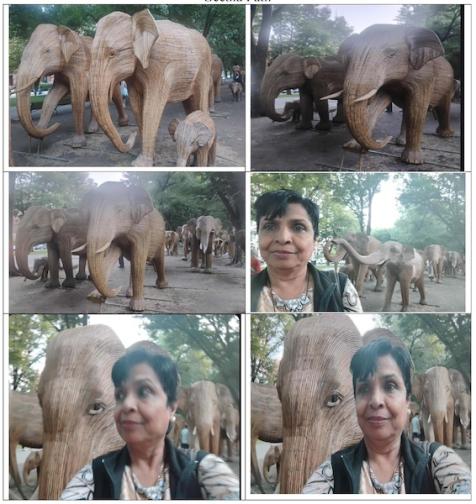
For a few unforgettable hours today, I forgot that I was walking through the heart of Boston. As I entered the tree-lined Commonwealth Avenue Mall, I found myself standing before what appeared to be a magnificent herd of elephants peacefully making their way through a forest. Mothers guarded their calves, young elephants walked close to their families, and towering tuskers seemed to lead the journey. It was an extraordinary sight—one that stopped everyone in their tracks. This was The Great Elephant Migration, an outdoor public art exhibition featuring 100 life-sized elephant sculptures, handcrafted by Indigenous artisans from India's Nilgiri Biosphere Reserve. The installation has transformed one of Boston's most iconic avenues into a place of reflection, wonder, and conversation. Seeing all one hundred elephants together was overwhelming. The herd stretched across the green lawns beneath centuries-old trees, creating an illusion so realistic that visitors instinctively slowed their pace, as if they had entered the natural habitat of these majestic animals. What made the experience even more heartwarming was watching families interact with the installation. Children happily sat beneath the elephants enjoying their snacks, completely at ease in the company of the gentle giants. Their laughter echoed through the park as parents photographed them from every angle. The elephants became more than sculptures—they became companions, storytellers, and silent teachers. Throughout the afternoon, hundreds of visitors walked among the herd. Some paused quietly to admire the intricate details, while others eagerly posed for photographs. Every elephant seemed to have its own personality. Some appeared curious, others protective, while the tiny calves captured every visitor's heart. As I moved closer, I was amazed by the extraordinary craftsmanship of the artisans. From a distance, the elephants appeared almost alive. Up close, the intricate layers of woven natural material revealed the countless hours of patience, skill, and dedication invested in each sculpture. Every wrinkle, every curve of the trunk, every gentle fold of the ears reflected the remarkable talent of Indian craftsmen. As an Indian, I felt a deep sense of pride. Here, thousands of miles away from home, visitors were admiring not only beautiful works of art but also the rich artistic traditions and craftsmanship of India's Indigenous communities. It was a reminder that Indian artisans continue to earn global recognition through their creativity and their close connection with nature. Curious to know what others felt, I spoke with several visitors strolling through the exhibition. One young couple smiled and said, "We've never seen anything like this before. It feels peaceful, almost magical." Another visitor reflected, "These elephants make you stop and think. We often forget that wildlife and people share the same planet. This exhibition reminds us that there has to be a balance between nature and human life." Those simple words captured the very essence of the exhibition. It was not merely an art display; it was an invitation to reflect on conservation, coexistence, and our shared responsibility toward the natural world. Many visitors were pleasantly surprised to learn that the sculptures are also available for purchase. Beyond being works of art, each elephant supports a larger mission of wildlife conservation and the livelihoods of the artisans who painstakingly created them. The exhibition beautifully demonstrates how art can become a powerful force for environmental awareness and community empowerment. Walking through the installation, I noticed that no one seemed to be in a hurry. People lingered. They read the information panels, exchanged thoughts with strangers, admired the elephants from different perspectives, and simply enjoyed being surrounded by such an unusual sight in the middle of a busy city. In today's fast-paced world, that sense of pause is perhaps one of the exhibition's greatest achievements. The Great Elephant Migration is much more than a collection of sculptures. It is a bridge between continents, connecting India's forests with Boston's urban landscape, Indigenous craftsmanship with contemporary art, and conservation with public engagement. Without saying a word, the silent herd tells a powerful story of coexistence, resilience, and hope. As I prepared to leave, I turned back for one final look. Against the backdrop of towering green trees, the elephants stood quietly, as though continuing their timeless journey. For a brief moment, Commonwealth Avenue no longer felt like a city street. It felt like a place where art, nature, and humanity had come together in perfect harmony. The memory of this remarkable herd will remain with me long after the exhibition moves on—an enduring reminder that some journeys are not measured in miles but in the thoughts, they leave behind.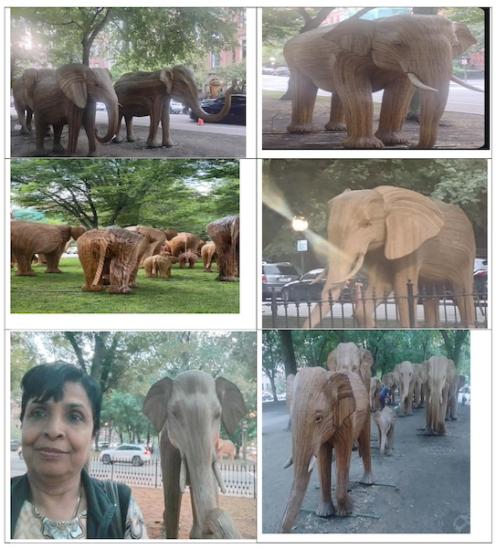
You may also access this article through our web-site http://www.lokvani.com/

