Contribute
| Fourth Regional New England Folk Literature And Oral Poetry Festival |
Dr. Anjana Bose
08/27/2026
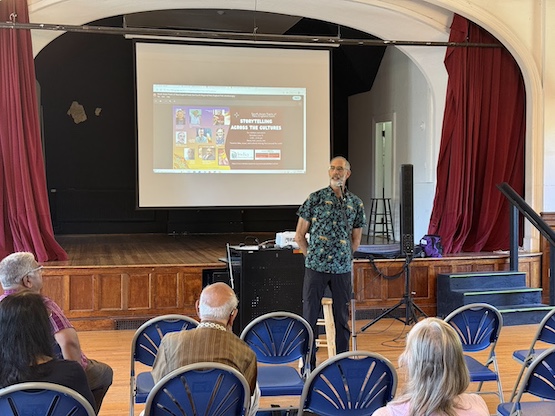
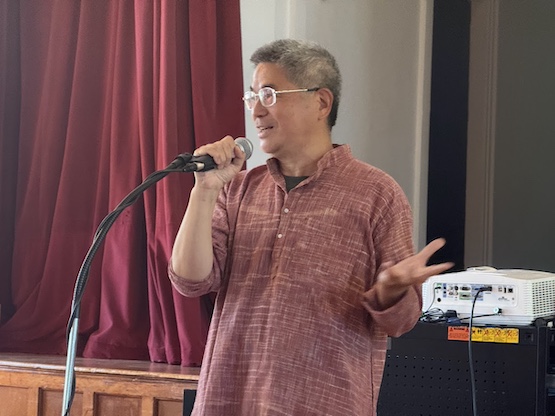
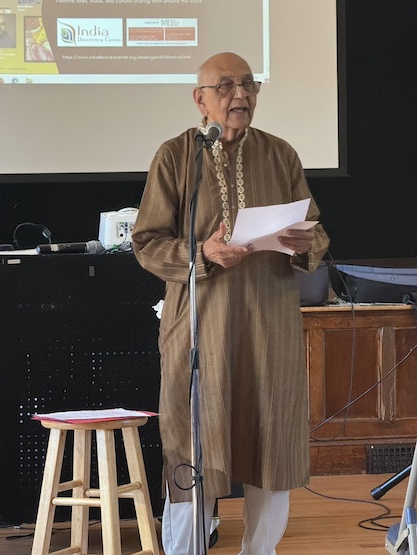
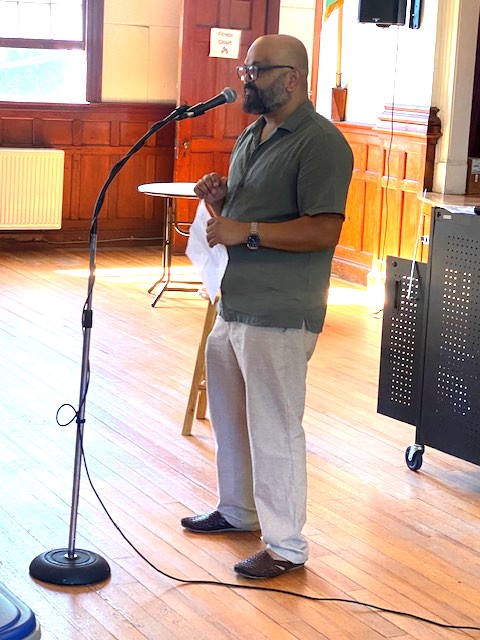
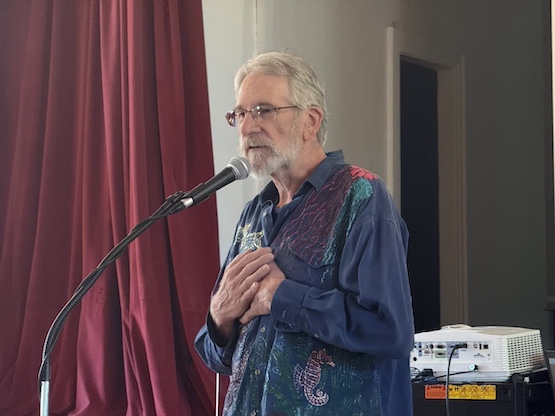
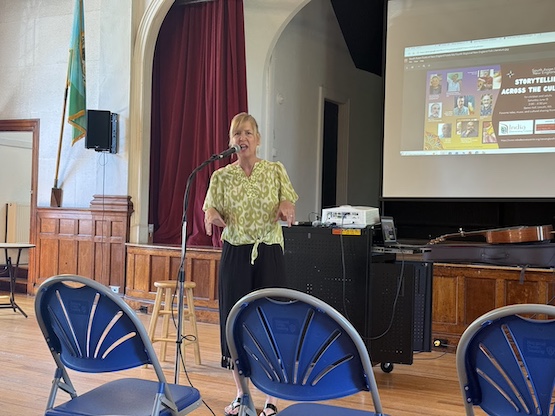
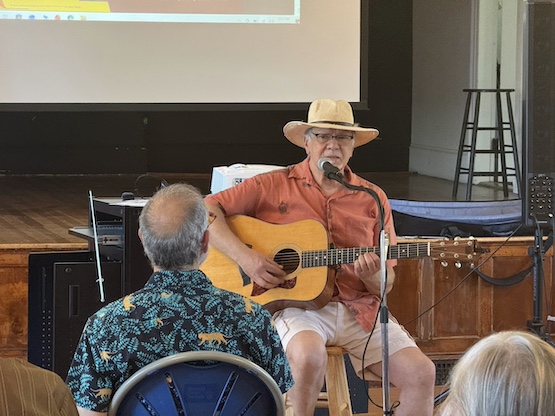
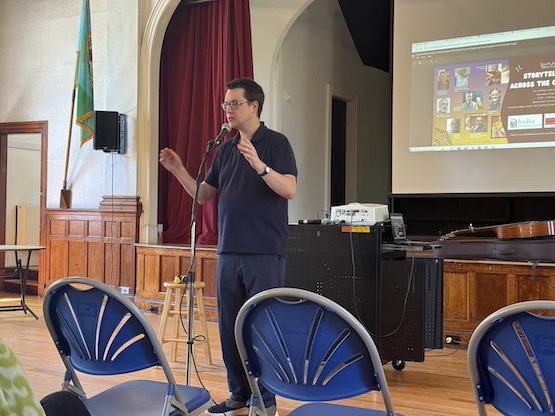
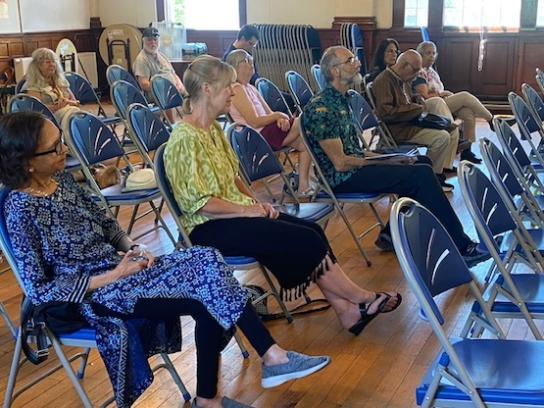
Fourth Regional New England Folk Literature and Oral Poetry Festival The Fourth Regional New England Folk Literature and Oral Poetry Festival hosted by India Discovery Center was celebrated with an international storytelling program on June 13, 2026, held at Bennis Hall in Lincoln, MA. It brought together presenters from multiple cultural traditions, a community-based cultural exchange sharing folktales, songs, poems, and reflective commentary from multiple traditions, including Persian, Chinese, Indian, Norwegian, and American sources. Storytelling is among the oldest forms of cultural education. Before stories are written, ideas are formed shaped by memory, experiences and encounters, and often shared with audiences using gesture, rhythm, humor, and songs. A public storytelling program creates a setting in which cultural knowledge can be shared across generations and communities, and in which listeners encounter unfamiliar traditions through narrative experience. The range of stories, poems, and songs engaged the audience to move across geographic and religious worlds through narrations and humor. The selections included stories associated with Panama, Persia, China, India, Norway, and the United States, as well as musical adaptations. Paul Rogoshewski The Library Tree: A beautiful rendition of a local landmark “The Library Tree” with possible explanation for why Lincoln’s famous twisted tree grew into its unusual shape. Be the Change: A hip-hop song by MC Yogi, translated into folk-hop, about the life of Mahatma Gandhi. If I Had a Hammer: A tweaked version of Pete Seeger’s famous song, reimagined as “If I Had a Story,” with everyone singing along. The musical presentations framed storytelling not simply as preservation of the past but as a living practice that can be adapted for contemporary community life. Nicolette Nordin Heavey Conejito: A Panamanian folktale about a bold little rabbit who hops up the mountain to visit his auntie, Tia Monica. Fox, Tiger, and Lion each try to eat him, but Conejito outsmarts them with help from clever, dance-loving Tia Monica, who sends him rolling down the mountain in a barrel: “rodundo, rodundo, rodundo.” The story exemplified animal trickster motifs to dramatize vulnerability, danger, and clever survival. The Quest: A Persian folktale about willful Princess Emmeline, who takes too long to choose a husband. Her father, the King, organizes a quest in which her suitors—a mighty warrior, a battle-tested knight, and a court jester—must first find the most evil thing in the kingdom and then the most wonderful thing. The King, his wise men, and Princess Emmeline all have different opinions about who should win. Trevor Maloof Aladdin and the Magic Lamp: Aladdin is a fisherman who wants to find treasure to help his village hold a festival. An old man leads him to a cave where they find a magic lamp, but the man reveals himself to be an evil sorcerer and leaves Aladdin trapped inside. Aladdin discovers a magic ring that transports him back to his village, then finds the lamp and a genie who grants him three wishes. He uses two wishes to banish the sorcerer and take away his powers, and he uses his final wish to give the village its festival. The villagers are so grateful that they make him mayor. An enchanting folktale of suspense, surprise, and resolution. Michael Cohen Patakin: Based on a very old traditional drum story, this tale begins with Lord Shiva creating the world and falling into exhaustion. When he wakes, he must deal with a persistent, social-climbing demon. Shiva unwisely sends the demon on errands and, as a reward, is forced to grant him the power of his third eye: a beam of all- destroying force. The traditional story demonstrated how mythic narratives often address human questions through heightened symbolic worlds. Hungry Forest Cat: Norwegian Forest Cats are very large, but this one has an even larger appetite. The cat swallows everything edible in its path until it meets a brave billy goat on a bridge—and discovers that the billy goat has the larger appetite. Chow Chin Chuang Princess Iron Fan of Flaming Mountain: The monk Tang Sanzang and his disciples, especially Sun Wukong, arrive at Flaming Mountain, a vast region of blazing fire that blocks their road west. The heat is so intense that neither the pilgrims nor their horses can pass. Their only hope is the magical Banana Leaf Fan, owned by Princess Iron Fan, wife of the Bull Demon King and mother of Red Boy. The story drew from the Chinese journey tradition, presenting a landscape of obstacle, heat, magical assistance, and pilgrimage. Maneesh Srivastava Sugriva Meets Rama from the Indian epic Ramayana: As Prince Rama searches for his abducted wife, Sita, he meets Sugriva, the exiled king of the Vanaras. United by suffering and hope, they form a sacred bond of friendship, but friendship alone is not enough. Sugriva seeks Rama’s help in overcoming his powerful brother Bali, whose actions have cost him his kingdom, his family, and his honor. As promises are made and destinies intertwine, Rama must confront profound questions of justice, duty, and loyalty. The story highlighted friendship, exile, justice, and obligation at the center. Jayant Dave “Unt Kahe” (“The Camel Says”): A Gujarati poem and story in which a camel mockingly lists the physical “defects” of other animals, such as the crane’s crooked neck and the parrot’s curved beak, until a fox points out the camel’s own flaws. The poem used camel’s criticism of other animals to reveal the blindness of self-judgment. Bruce Marcus of StorySpace acted as the MC for the event. Reflections Mr. Marcus: “I was intrigued and excited by the program’s multicultural spirit. Storytelling can bring different parts of the world together much as World Cup soccer and the Olympics do, while also deepening empathy. From a producer’s standpoint, I found merit in every presenter: each brought cultural pride, passion, entertainment value, and a distinct performance style to the program.” In summary, the program used storytelling for intercultural learning. It reminded all that stories adapt and endure because they help communities think together about danger, justice, and hope. We acknowledge the support of Massachusetts Cultural Council for a grant to host the event. We thank Ms. Andrea Kamens of StorySpace in Somerville, MA for creating the program and we thank the Council of Aging in town of Lincoln for permission to use the facilities. We thank Mr Satyendra Sharma of India Discovery Center for help with the IT support in the Bemis Halll. We express our gratitude to Mr. Chow Chin Chuang for taking the pictures and Mr. Maneesh Srivastava for capturing the video. The raw video is archived at (sound did not come out good) https://www.youtube.com/live/OpX_FU2rT6E?si=u-Zzqtivowboiv5p South Asian Poets of New England is a sister organization of India Discovery Center, operating from Lincoln, MA https://www.indiadiscoverycenter.org
International Storytelling: Multicultural Program
You may also access this article through our web-site http://www.lokvani.com/