
Contribute
| Sawan Shravan Maas - Walking The Path Of Shiva In Kaliyuga |
Pandit Bharani
08/15/2026
Every year, as the monsoon clouds gather and the earth becomes green and renewed, millions of Hindus turn their hearts toward Lord Shiva. The sacred month of Sawan, or Shravan Maas (Started on July 30 and ends on August 28, 2026) arrives with the chanting of “Om Namah Shivaya,” the ringing of temple bells, the fragrance of Bilva leaves, and the gentle sound of water being offered to the Shiva Lingam. For devotees, Sawan is much more than a month on the religious calendar. It is an invitation to pause, reflect and purify ourselves. In today's world, when life is filled with competition, stress, material desires and constant distractions, the message of Lord Shiva is perhaps more relevant than ever. Shiva teaches us how to remain calm in the middle of turmoil, compassionate in the presence of suffering, humble despite our strength and detached despite living in a material world. Shiva in the Vedic Tradition The connection between Shiva and the Vedic tradition is ancient. In the Vedas, the divine is praised in the form of Rudra, a powerful yet compassionate presence who can both destroy and heal. The celebrated Shri Rudram, found in the Krishna Yajurveda, repeatedly offers salutations to Rudra and recognizes the Divine presence in the many dimensions of creation. The famous passage, “Namah Shivaya cha Shivataraya cha” captures the spirit of devotion that has continued through generations. The Shvetashvatara Upanishad goes even deeper in its contemplation of Rudra. It speaks of the One Divine Reality beyond multiplicity and identifies Rudra with the supreme principle behind creation. The Vedic vision therefore encourages us to see Shiva not merely as a deity confined to a temple, but as a profound spiritual reality—one who represents consciousness, transformation, dissolution of ignorance and the possibility of liberation. This is why the simple mantra “Om Namah Shivaya” has such extraordinary significance. It is not merely a sound repeated by the lips. It is an act of surrender: I bow to Shiva; I bow to the Divine within and beyond me. Sawan is Closely Associated with Shiva The association of Shravan with Shiva is deeply established in Hindu devotional tradition. During this month, devotees traditionally visit Shiva temples, observe Sawan Somwar fasts, perform Abhishekam, offer Bilva leaves and chant Shiva mantras. The monsoon itself provides a beautiful spiritual setting. Water, which is essential for life, becomes the central offering to Shiva. The devotee pours water over the Shiva Lingam while praying for purification, peace and divine grace. But there is a deeper question we should ask: What are we trying to purify? Perhaps it is not the Shiva Lingam that needs purification. It is our own mind. We offer water to Shiva so that our anger may become cool. That is the deeper meaning of worship. The Great Story of Samudra Manthan One of the most powerful stories associated with Lord Shiva is the Samudra Manthan, the churning of the cosmic ocean, narrated in the Puranic tradition, including the Shrimad Bhagavatam. When the Devas and Asuras churned the ocean in search of Amrita, the nectar of immortality, one of the first things to emerge was the terrible poison known as Halahala. The poison spread through the universe, threatening all creation. The Devas and other beings turned to Lord Shiva for protection. Moved by compassion, Shiva accepted the poison and drank it. According to the Bhagavata Purana, Shiva explains that protecting those who are suffering is the duty of one who possesses strength. He then takes the poison, which remains in his throat, giving him the name Neelakantha—the Blue-Throated One. This is one of the greatest lessons Shiva offers humanity. The world today also produces its own Halahala—anger, hatred, jealousy, intolerance, greed, misinformation, resentment and violence. We cannot prevent every negative thing from entering our lives. But we can decide what we do with it. Shiva teaches us not to pass the poison forward: 1) Someone insults us; we need not insult them back, 2) Someone is angry with us; we need not become angry in return, 3) Someone spreads negativity; we need not become its carrier, 4) To “hold the poison in the throat” can be understood as learning to contain our reactions through wisdom rather than allowing negativity to spread through our words and actions. This is a lesson that every family, every community and indeed the entire world needs today. The Ganga in Shiva's Matted Hair Another beautiful story associated with Shiva is the descent of the sacred Ganga. According to the Ramayana and later Puranic traditions, King Bhagiratha performed intense austerities to bring Ganga from the heavens to earth so that his ancestors could attain liberation. But the force of her descent was so tremendous that the earth could not withstand it. Bhagiratha prayed to Lord Shiva. Shiva received the powerful river upon his matted locks and released her gently toward the earth. The symbolism is profound. Great power without discipline can become destructive. Great power guided by wisdom becomes a blessing. Our knowledge, wealth, position and influence are also forms of power. Shiva teaches us that these gifts should be controlled by humility and used for the welfare of others. In an age when people often measure success by how much they possess or how much influence they command, Shiva reminds us that the greatest person is not necessarily the one who has the most power—but the one who knows how to use power responsibly. The Story of Markandeya: Faith Beyond Fear The story of young Markandeya is another beloved Shiva tradition. Markandeya was destined to live only a short life. Yet he devoted himself completely to Lord Shiva. When death came to claim him, Markandeya embraced the Shiva Lingam and refused to abandon his devotion. Lord Shiva appeared and protected his devotee. The story is remembered as a powerful expression of faith, courage and surrender in the face of fear. Its message is not that a devotee will never experience difficulties. Rather, it teaches that sincere spiritual strength can transform the way we face fear. Today, many people silently carry anxiety about their families, careers, finances, relationships and future. Sawan gives us an opportunity to remember that faith does not mean running away from life's problems. Faith gives us the courage to face them with a steadier mind. "May this holy month of Shravan inspire us to walk the path of compassion, gratitude, and inner peace, carrying its sacred light far beyond the season itself." I invite all of you cordially on behalf out Shivalaya Temple of Greater Boston Management Committee to participate in our Rudrabhishekam and Shravan Somavar Pujas actively and support the temple generously. For mor information visit the temple website @ https://www.shivalayaboston.com/Welcome.do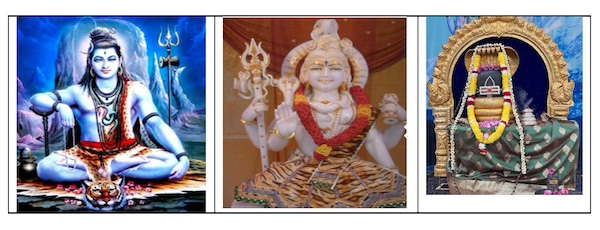
“Salutations to Shiva, the auspicious and most benevolent,”
We offer Bilva leaves so that our thoughts may become pure.
We light a lamp so that ignorance may give way to wisdom.
We ring the temple bell so that the noise within our minds may become silent.
You may also access this article through our web-site http://www.lokvani.com/
