
Contribute
| Shiva Rudrabhishekam |
Pandit Bharani
08/06/2026
As the gentle monsoon showers wash the earth and nature adorns herself in vibrant green, millions of devotees across India and the world welcome Shravan Maas, one of the holiest months in the Hindu calendar. Temples resonate with the chanting of "Om Namah Shivaya," while devotees gather to perform Rudrabhishekam, the sacred ritual of bathing the Shiva Linga with water, milk, honey, yogurt, ghee, coconut water, and Bilva leaves. More than an elaborate religious ceremony, Rudrabhishekam is a profound spiritual practice that symbolizes the purification of the mind, the surrender of the ego, and the awakening of inner consciousness. Its timeless message is perhaps more relevant today than ever before. Why is Shravan Dedicated to Lord Shiva? According to the Puranas, during the cosmic churning of the ocean (Samudra Manthana), a deadly poison called Halahala emerged, threatening all creation. To protect the universe, Lord Shiva compassionately consumed the poison and held it in His throat, earning the name Neelakantha, the Blue-Throated One. In gratitude, the Devas continuously poured sacred water over Shiva to cool the intense heat generated by the poison. This act is believed to have inspired the tradition of Abhishekam, especially during the sacred month of Shravan. The ritual reminds humanity that true greatness lies not in power, but in selfless sacrifice for the welfare of others. Rudrabhishekam in the Vedas The origins of Rudrabhishekam are found in the Krishna Yajurveda, particularly in the Sri Rudram (Namakam and Chamakam), one of the most revered hymns dedicated to Lord Rudra. The Vedic prayer declares: "नमः शिवाय च शिवतराय च" Another powerful invocation from the Yajurveda prays: "ॐ त्र्यम्बकं यजामहे सुगन्धिं पुष्टिवर्धनम्। उर्वारुकमिव बन्धनान्मृत्योर्मुक्षीय माऽमृतात्॥" This Mahamrityunjaya Mantra has been recited for centuries as a prayer for healing, courage, and spiritual strength. The Symbolism of Rudrabhishekam Every offering made during Rudrabhishekam carries a deeper spiritual meaning. Ultimately, the greatest offering is not milk or flowers—but one's ego, anger, greed, and pride. Wisdom from the Saints The 12th-century philosopher and social reformer Basavanna taught that true worship lies in righteous living rather than outward ritual alone: "The rich may build temples for Shiva; my body itself is His temple." His message reminds us that devotion must be reflected through compassion, honesty, and service. Similarly, Adi Shankaracharya, in the Shivānanda Lahari, expresses the devotee's yearning: "O Lord Shiva, let my mind remain forever at Your lotus feet." For Shankaracharya, the highest Abhishekam was the continuous flow of devotion from the heart. Rudrabhishekam Relevance in Today's World Modern life is filled with stress, anxiety, constant digital distractions, environmental degradation, and social divisions. The spiritual ideals embodied in Rudrabhishekam offer practical lessons for contemporary society. · Purification of the Mind: As water washes the Shiva Linga, devotees are reminded to cleanse their own minds of anger, jealousy, hatred, and negativity. · Cultivating Compassion: Lord Shiva willingly accepted suffering to protect the universe. His example inspires selflessness, empathy, and service to others. · Respect for Nature: Shravan coincides with the monsoon, emphasizing humanity's intimate relationship with rivers, forests, mountains, and rainfall. Protecting the environment becomes an act of worship. · Mental Well-being: Studies suggest that meditation, rhythmic chanting, and mindful prayer can reduce stress, improve emotional resilience, and promote inner calm. The collective chanting of "Om Namah Shivaya" during Rudrabhishekam creates an atmosphere of peace and reflection. · Strengthening Communities: Temple gatherings during Shravan bring families and neighborhoods together, fostering generosity, volunteerism, and cultural continuity across generations. Beyond Rituals While sacred offerings hold symbolic value, the scriptures consistently emphasize that character is the highest form of worship. A person who speaks kindly, helps the needy, protects nature, honors parents, and performs honest work performs a daily Rudrabhishekam in the temple of life. As Basavanna beautifully reminded us: "Compassion is the root of all religion." A Timeless Message Shravan Maas is not merely about visiting temples or performing elaborate rituals. It is an invitation to transform ourselves. Every drop of water poured over the Shiva Linga asks us to let go of ego. Every Bilva leaf reminds us to cultivate purity. Every chant of "Om Namah Shivaya" encourages inner silence amidst the noise of modern life. The ancient Vedic prayer concludes with a universal aspiration: "शं नो मित्रः शं वरुणः।" In a world yearning for compassion, environmental responsibility, and inner balance, the message of Shravan Maas and Shiva Rudrabhishekam continues to shine with timeless relevance. True worship begins not only in the temple but in the heart—where every act of kindness, every word of truth, and every gesture of selfless service becomes an offering to Lord Shiva. You all are invited cordially on behalf out Shivalaya Temple of Greater Boston’s Management Committee to participate in our Rudrabhishekam and Shravan Somavar Pujas actively and support the temple generously. For mor information visit the temple website @ https://www.shivalayaboston.com/Welcome.do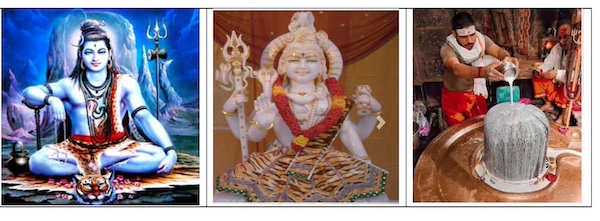
Salutations to Shiva, the Auspicious One, and to Him who bestows the highest auspiciousness.
"We worship the Three-Eyed Lord, who is fragrant and nourishes all beings. Like the fruit falls off from the bondage of the stem. May He liberate us from suffering and lead us toward immortality."
May there be peace, harmony, and well-being for all.
You may also access this article through our web-site http://www.lokvani.com/
