Contribute
| Fourth New England Folk Literature And Oral Poetry Festival |
Dr. Rita Pandey
07/24/2026
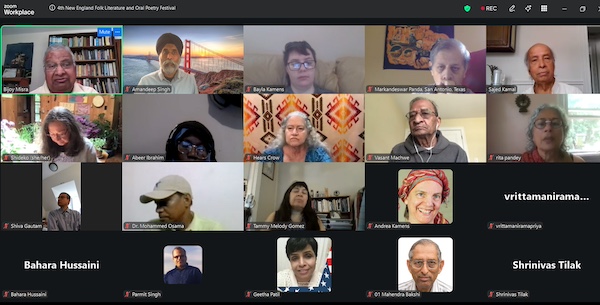
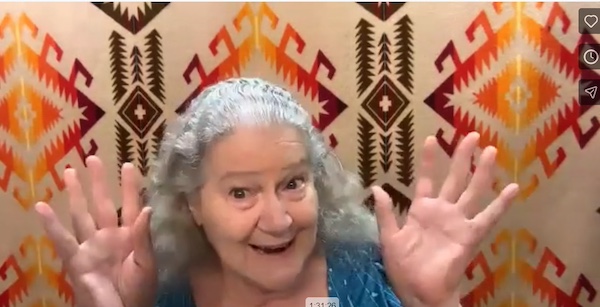
Fourth New England Folk Literature and Oral Poetry Festival Topic- “Independence” June 28, Sunday 10 AM, Virtual Report by Dr Rita Pandey Poetry has been part of my life since childhood. Once or twice each year, my hometown in India hosted a grand Kavi Sammelan (gathering of poets), one of the most anticipated cultural events in a time before television, smartphones, computers, or the internet. A large stage was erected in an open field where renowned poets from across India recited patriotic, romantic, humorous, and philosophical poetry late into the night. Throughout the year, I eagerly listened to poetry broadcasts on my small transistor radio. As my education deepened, so did my appreciation of Hindi and Urdu poetry, which became an enduring part of my life. I was a part of the First New England Regional Folk Literature and Oral Poetry Festival in 2021. But my world expanded significantly after attending the Fourth New England Regional Folk Literature and Oral Poetry Festival, organized on the theme of "Independence," the festival brought together poets representing Sanskrit, Greek, Arabic, Farsi, Spanish, Nepali, Hindi, Kannada, Bengali, Odia, Punjabi, and Native American languages. Each poem was presented in its original language with an English translation, allowing the audience to appreciate both its linguistic beauty and the universal message. The festival opened with welcoming remarks by Dr. Bijoy Misra, who shared the history of the India Discovery Center. He explained that poetry readings began at Harvard University in 1997, initially celebrating the many languages of India. In 2016, the initiative expanded into the South Asian Poets of New England (SAPNE), and today it embraces poets from diverse linguistic and cultural backgrounds across New England. The program began with the spiritual wisdom of the Bhagavad Gita, beautifully chanted in Sanskrit by Vittamani Ramapriya. Bayla Kamens followed with Solon's Fragment 36 in Ancient Greek, recounting the liberation of both land and people from debt and bondage in ancient Athens. Abeer Ibrahim then presented The Story of Jordan in Arabic, offering a moving reflection on her country's history and cultural identity. Indian history and heroism were celebrated through Gouri Datta's stirring recitation of Subhadra Kumari Chauhan's famous poem on Rani Lakshmibai of Jhansi and Geetha Patil's lyrical Kannada rendition honoring Rani Chennamma of Kittur. Both queens embodied extraordinary courage in resisting British colonial rule. Themes of identity, resilience, and justice continued throughout the afternoon. Tammy Gomez shared excerpts from I Am Joaquín in Spanish, portraying the struggle for identity and dignity among Mexican Americans. Bahara Hussaini read Nadia Anjuman's poignant Farsi poem The Caged Afghan Girl, expressing the pain and confinement endured by Afghan women. Siva Gautam's Nepali poem reflected on freedom as humanity's innate and inalienable nature, while Amandeep Singh's moving Punjabi rendition of O' People of India, Remember Us honored the sacrifices of India's freedom fighter. Parmit Kumar Singh concluded the Hindi segment with a powerful call to action in The Call for Independence. Sajed Kamal presented Kazi Nazrul Islam's Bengali poem Those Iron Gates of the Prison, a passionate appeal to resist oppression and injustice. Dr. Misra concluded the multilingual presentations with his father's inspiring Odia poem, Pledge, O' Fighter, Pledge, urging every citizen to safeguard India's hard-earned independence. The festival concluded with a chant by Native American poet Pupuhkeeskan Nootauau Kaukontuah, also known as Hears Crow. Through chant and storytelling rooted in the Longhouse tradition, she reflected on the survival of Indigenous peoples, inner strength, and the importance of living in harmony with the four cardinal directions. She reminded us that true independence begins within the human spirit. The festival demonstrated that, despite differences in language and culture, poetry speaks a universal language of freedom, dignity, resilience, and hope. It was a powerful celebration of our shared humanity. My heartfelt thanks to the SAPNE team for organizing this inspiring event, and to the Massachusetts Cultural Council for their support. I thank Mr. Amandeep Singh for recording the festival video, allowing many more people to experience this remarkable celebration of world poetry. I am grateful to the organizers for letting me moderate this memorable journey. The video for the event is edited by Mr. Maneesh Srivastava and is archived at https://youtu.be/rwpxlc8LrpA. South Asian Poets of New England is a wing of India Discovery Center https://southasiapoets.wixsite.com/sapne
You may also access this article through our web-site http://www.lokvani.com/