
Contribute
| Pneumonia: A Look At A Common But Serious Illness |
Dr. Indrajeet Tyagi and Dr. Iranna Hirapur
04/30/2026
Pneumonia is often spoken about as a medical condition, but its impact goes far beyond the walls of hospitals and clinics. A disease touches families, communities, and health systems, particularly affecting children, older adults, and those with weakened immunity. A holistic approach—offers the most effective way to understand and address pneumonia. What is Pneumonia? Pneumonia is an infection of the lungs that causes inflammation of the air sacs (alveoli), which may fill with fluid or pus. It can be caused by bacteria, viruses, fungi, or, in some cases, inhalation of irritants. Symptoms range from cough, fever, chest pain, and difficulty breathing to fatigue and confusion, especially in older adults. While many people recover with timely treatment, pneumonia can be life‑threatening if ignored or inadequately managed. Please describe medical perspective of pneumonia From a clinical standpoint, early diagnosis and appropriate treatment are crucial. Bacterial pneumonia often requires antibiotics, while viral pneumonia is managed with supportive care, such as oxygen, fluids, and rest. Severe cases may require hospitalization. However, medicine alone is not enough. Overuse and misuse of antibiotics have contributed to antimicrobial resistance, making some forms of pneumonia harder to treat. Rational prescribing, patient compliance, and public awareness are essential parts of responsible medical care. Please describe Ayurvedic perspective of pneumonia In Ayurveda, pneumonia is not described as a single disease entity by its modern name, but its clinical presentation closely corresponds to conditions such as Shwasa (diseases causing breathlessness), Kasa (cough), Jwara (fever), and Urah‑roga (diseases of the chest). From an Ayurvedic standpoint, pneumonia is understood as a disorder of imbalanced doshas, impaired digestion and immunity, and obstruction of respiratory channels. Ayurvedic explanations and therapies are intended as complementary to modern medical care, especially for serious infections like pneumonia. Pneumonia is primarily seen as a disorder involving: Most cases resemble a Kapha‑Vata predominant condition, with Pitta involvement when fever and inflammation are prominent. Pathogenesis (Samprapti – Disease Development) According to Ayurveda, pneumonia develops through the following sequence: Thus, pneumonia is viewed not only as a lung disease but as a systemic imbalance affecting digestion, immunity, and respiration. What are the symptoms of pneumonia? Modern Symptom Ayurvedic Symptoms Cough Breathlessness Fever Chest congestion Weaknesses, fatigue Loss of appetite Kasa Shwasa Jawar Kapha accumulation in Uras Dhatukshaya (tissue depletion) Agnimandya What are the causes of Pneumonia – Modern & Ayurvedic Perspective Pneumonia is a disease of the lungs, but its causes are understood differently in modern medicine and Ayurveda. While modern science focuses on infectious agents and risk factors, Ayurveda explains pneumonia through disturbance of internal balance, digestion, immunity, and environmental influences. Together, these perspectives provide a comprehensive understanding of why pneumonia develops. Aspect Modern Medicine Ayurveda Primary Cause Infections (bacteria, virus, fungi) Dosha imbalance + Ama Core Mechanism Lung infection & inflammation Impaired digestion & blocked channels Key Contributing Factors Smoking, age, immunity Poor diet, cold exposure, lifestyle Focus Pathogen elimination Restoring balance & immunity Integrated Understanding is that modern science explains what causes pneumonia, while Ayurveda explains why the body becomes vulnerable. Key takeaway here is Pneumonia arises from external causes (infections, environment) and internal vulnerability (weak immunity, poor digestion, imbalance). An integrated approach—combining timely medical treatment with lifestyle, nutrition, and immune support—offers the most effective path to prevention and healing.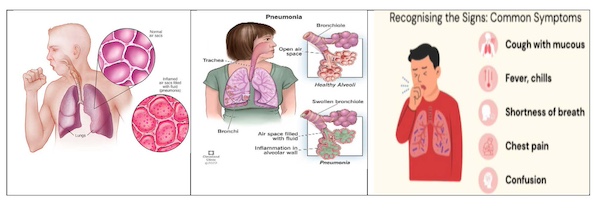
You may also access this article through our web-site http://www.lokvani.com/
