
Contribute
| Know Why The Hanuman Chalisa And Bhajans Continue To Inspire Millions |
Sunil Kumar D.
04/23/2026
As twilight descends on every Tuesdays and Saturdays, a familiar tempo begins to ripple through countless homes and temples—a solid, reverent recitation of the Hanuman Chalisa, accompanied by the melodious strains of devotional bhajans. It appear, at first glance, as a simple religious routine but in truth, a profound and living tradition—one that binds generations, nurtures inner strength, and sustains the spiritual heartbeat of millions. Penned by the revered 16th-century poet-saint Goswami Tulsidas, the Hanuman Chalisa is a masterpiece of devotion and poetic brilliance. Its forty verses are not merely words, but an invocation—a rhythmic meditation that celebrates the virtues of Lord Hanuman. In these verses, Hanuman emerges not only as a divine figure but as an eternal ideal: the perfect blend of strength and humility, courage and wisdom, power, and surrender. Rooted in the timeless epic Ramayana, Hanuman’s unwavering devotion to Lord Rama stands as one of the most compelling narratives of loyalty and service. His journey—from a humble servant to a heroic force capable of moving mountains—resonates deeply with devotees navigating the complexities of modern life. In Hanuman, they find not just a deity to worship, but a role model to emulate. The Sacred Significance of Weekly Observance The tradition of singing the Hanuman Chalisa weekly, particularly on Tuesdays and Saturdays, is steeped in symbolism and spiritual insight. Tuesday, associated with vigor, determination, and action, reflects Hanuman’s dynamic and fearless nature. It is a day when devotees seek strength—not only physical, but moral and emotional. Saturday, often perceived in Hindu belief as a day influenced by karmic trials and planetary challenges, carries its own depth of meaning. Devotees turn to Hanuman on this day as a protector and liberator, believing that his grace can help ease burdens, dispel negativity, and restore balance. According to traditional beliefs, the weekly observance serves a deeper purpose. It introduces rhythm into spiritual life—a deliberate pause amid the rush of modern existence. In setting aside time each week, individuals reaffirm their connection with faith, discipline, and introspection. Bhajans: Where Devotion Becomes Experience If the Hanuman Chalisa is the backbone of this weekly ritual, bhajans are its soul. These devotional songs, simple in structure yet profound in emotion, transform prayer into a shared experience. Sung in groups, often accompanied by harmonium, tabla, and the rhythmic clapping of hands, bhajans create an atmosphere that is both intimate and expansive. In these moments of collective singing, people forget their age, status, language, and background. The gathering becomes a spiritual community, united by a shared longing for peace and connection. Voices rise together, not in perfection, but in sincerity—and it is this sincerity that gives bhajans their transformative power. For many, these gatherings are more than religious events; they are emotional sanctuaries. In the repetition of divine names and melodies, worries soften, hearts open, and a quiet joy takes root. The Inner Science of Chanting While rooted in devotion, the practice of chanting the Hanuman Chalisa also holds profound psychological and meditative benefits. The structured rhythm of the verses, combined with controlled breathing, creates a calming effect on the mind. It reduces stress, enhances concentration, and fosters emotional resilience. In an age where anxiety and restlessness are increasingly common, such practices offer a natural and accessible form of mental well-being. The act of chanting engages both mind and body, guiding the practitioner into a state of focused awareness—a form of meditation that is both dynamic and deeply grounding. Moreover, the Hindu belief of Lord Hanuman as a remover of fear and obstacles carries powerful psychological resonance. Each recitation becomes an affirmation—a reminder that strength lies within, that challenges can be overcome, and that faith can illuminate even the darkest paths. A Bridge Across Generations One of the most remarkable aspects of this weekly tradition of Satsang is its role in preserving cultural continuity. In many households, children grow up listening to the Hanuman Chalisa long before they understand its meaning. Over time, the verses become familiar, then meaningful, and eventually, deeply personal. Grandparents pass it down to parents; parents to children. In doing so, they pass on not just a prayer, but a worldview—one that values devotion, discipline, humility, and service. In diaspora communities around the world, these weekly gatherings take on even greater significance. They become anchors of identity, helping individuals remain connected to their roots while navigating new cultural landscapes. Adapting Tradition in a Modern World Despite rapid technological advancement and changing lifestyles, the tradition of weekly chanting has not diminished—it has evolved. Today, virtual Satsang, online bhajan groups, and digital recordings allow devotees to participate from anywhere in the world. Anyone can join voices with another in any parts of the world, and remain united in devotion despite physical distance, whether experienced through a screen or in a temple courtyard, the essence remains unchanged. The words, the melody, and the intention continue to carry the same spiritual force that they have for centuries. More Than Ritual: A Way of Life Ultimately, the weekly singing of the Hanuman Chalisa and bhajans transcends the boundaries of ritual. It becomes a way of life—a practice that nurtures resilience, fosters community, and inspires inner transformation. It teaches that true strength lies in humility, that devotion is expressed through action, and that faith is not a one-time act, but a continuous journey. In a world often defined by uncertainty, this weekly return to devotion offers something invaluable: stability, clarity, and hope. An Eternal Echo of Devotion Week after week, the chant continues—not as repetition, but as renewal. Each verse carries the weight of centuries, yet feels as relevant today as ever. Each note sung in devotion becomes part of an eternal echo—one that reminds humanity of its deeper purpose. In the quiet power of the Hanuman Chalisa and the joyful expression of bhajans, millions find what they seek: strength in weakness, peace in chaos, and connection in solitude. No matter how much the world changes, this sacred rhythm endures—unwavering, uplifting, and profoundly socio-devotional event. 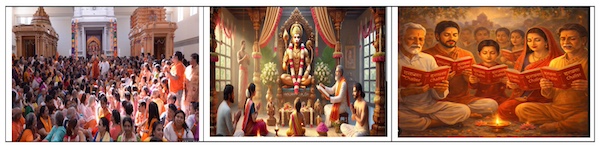
You may also access this article through our web-site http://www.lokvani.com/
