Contribute
| Making Music Together: Rhythm, Resonance, And Rare Instruments Open LearnQuest Music Festival 2026 |
Akash Deep
03/26/2026
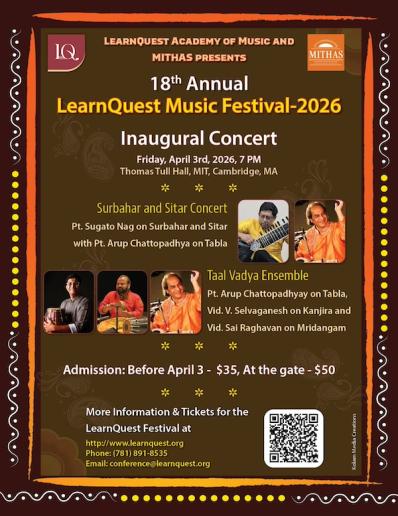
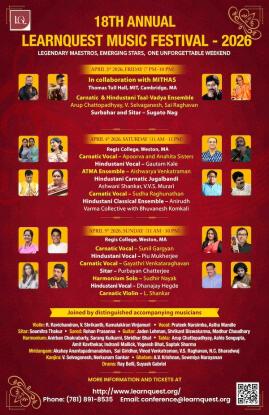
Making Music Together: Rhythm, Resonance, and Rare Instruments Open LearnQuest Music Festival 2026 This year’s LearnQuest Music Festival will open with an evening of rhythm, melody, and rare instrumental voices, bringing its central theme—Ensemble: Making Music Together—vividly to life. Through a curated program of percussion and melody, the opening night highlights the vibrant interplay of artists from different traditions as they listen, respond, and create a shared musical experience. The evening begins with a percussion ensemble featuring Arup Chattopadhyay (tabla), Selvaganesh (kanjira), and Sai Giridhar (mridangam). Bringing together musicians from Hindustani and Carnatic traditions, this performance provides a fitting opening to a festival that presents both traditions over the course of the weekend. Each instrument contributes a unique voice. The tabla, central to Hindustani music, is known for its tonal clarity and intricate rhythmic patterns. The mridangam, the principal percussion instrument of Carnatic music, offers a deep, resonant sound and a highly structured rhythmic framework. The kanjira, a small South Indian frame drum with roots in folk music, is perhaps the most unexpected presence: modest in size yet capable of remarkable tonal variation. Traditionally made with a monitor lizard-skin head stretched over a simple wooden frame, it produces everything from sharp accents to deep bass tones through subtle hand techniques. In the hands of a master like Selvaganesh, the kanjira becomes a dynamic and highly expressive instrument, adding both texture and spontaneity to the ensemble. The second half of the evening shifts from rhythm to melody, featuring Sugato Nag on surbahar and sitar, accompanied by Arup Chattopadhyay on tabla. While the sitar is widely recognized, the surbahar—often described as its deeper, more meditative counterpart—is rarely heard in concert. Designed for slow, expansive exploration of raga, it produces a rich, sonorous tone that lends itself to introspective alap and long, sustained phrases. Historically associated with the dhrupad tradition, it invites listeners into a contemplative musical space before giving way to the more agile and familiar voice of the sitar. Sugato Nag represents a distinctive lineage that bridges the Senia Shahjahanpur and Maihar traditions, having trained under Radhika Mohan Maitra and Buddhadev Dasgupta. He is among the few contemporary artists to present both sitar and surbahar in performance, bringing renewed attention to the instrument’s introspective voice. Together, the two segments of the evening—percussion ensemble and melodic recital—set the tone for the festival’s broader vision of music as samvaad, or dialogue. They highlight not only the distinctiveness of Hindustani and Carnatic traditions, but also their capacity to come together in meaningful exchange. The first evening of the festival’s three-day celebration of Indian classical music will be held at MIT’s Thomas Tull Concert Hall in Cambridge on Friday, April 3, before the festival moves to Regis College in Weston for the weekend. More information about the festival is available at learnquest.org/conference.
You may also access this article through our web-site http://www.lokvani.com/