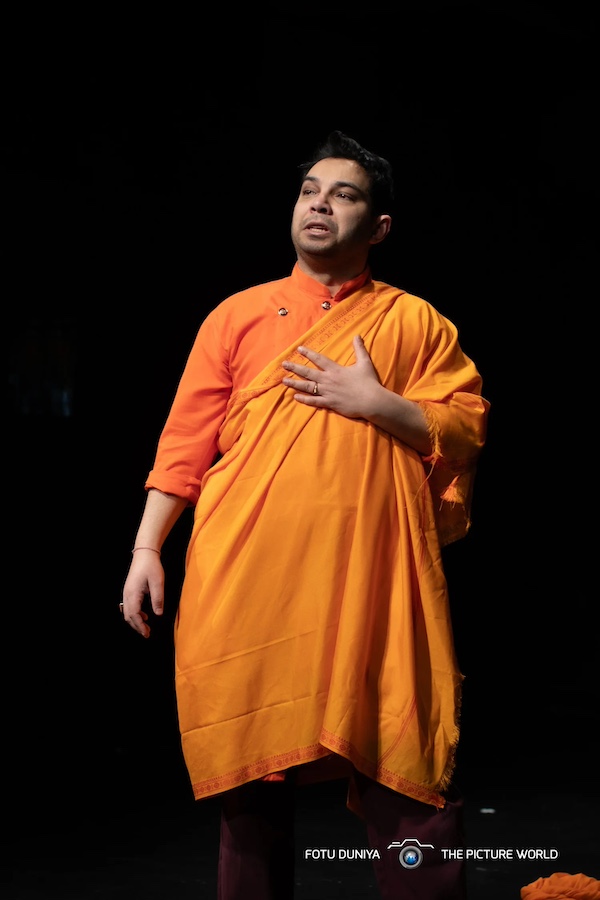
SETU, under Subrata Das, brought something bold to the stage with Human Vivekananda – not the icon, but the human being behind Swami Vivekananda.
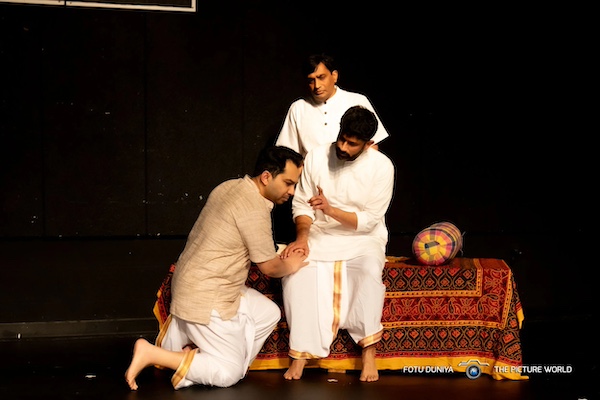
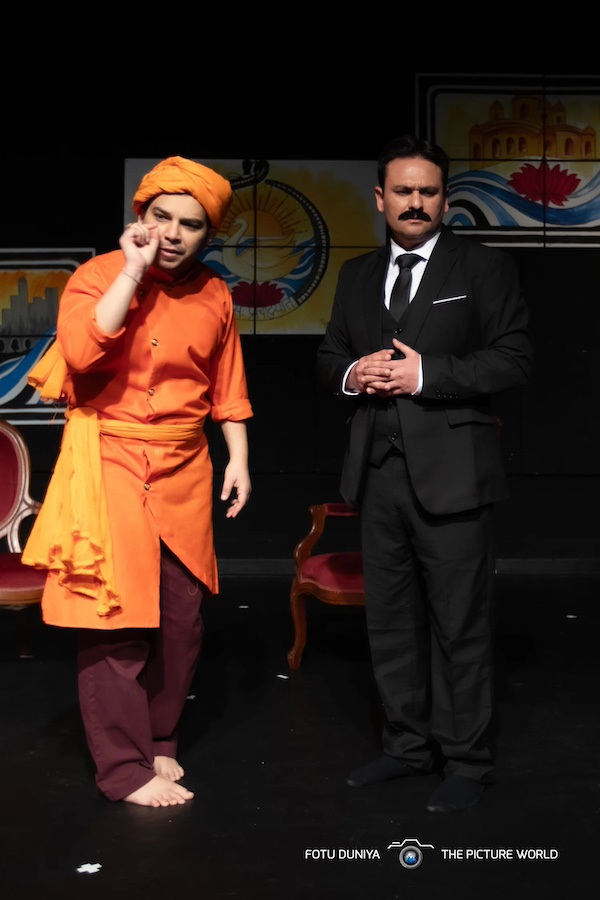
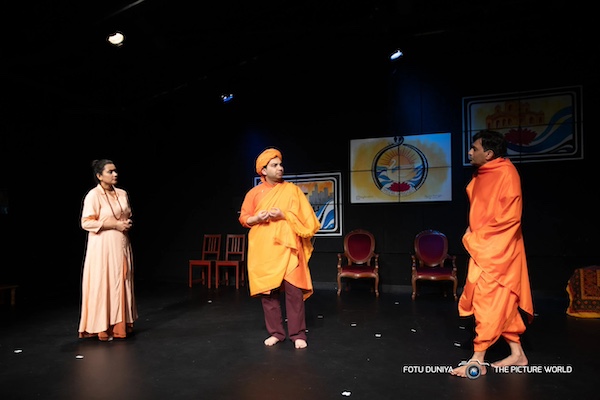
This wasn’t a linear play. It moved between memory and moment, reflection and reenactment—pulling us into the inner world of “Naren,” a young man struggling to find a job, torn between duty to family and an undeniable spiritual pull. The now-famous moment with Ramakrishna Paramahamsa—where he simply cannot ask the Divine Mother for material gain—lands with quiet power.
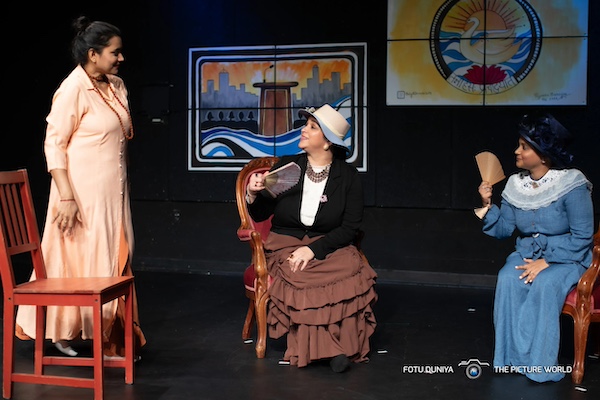
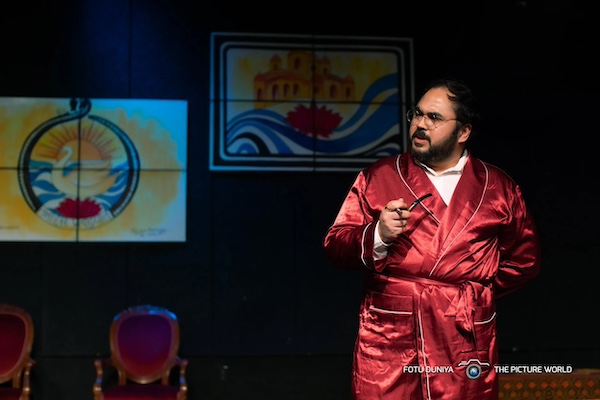
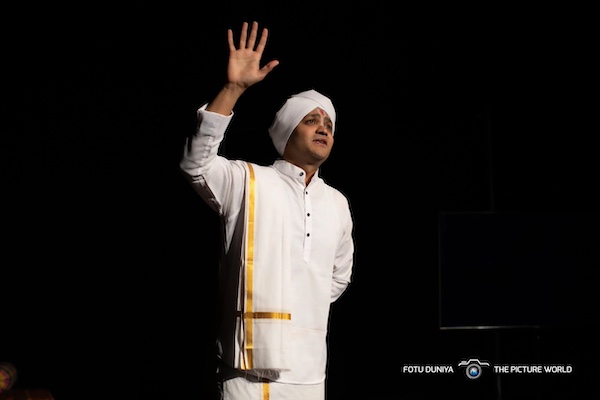
What follows is transformation. From uncertain Naren to the Vivekananda who would stand before the world and speak Vedanta with clarity, confidence, and force. His global encounters were a highlight—especially a striking moment with Nikola Tesla, hinting at the meeting point of science and spirituality. And a special mention to Janique for a standout portrayal of Sarah Bernhardt.
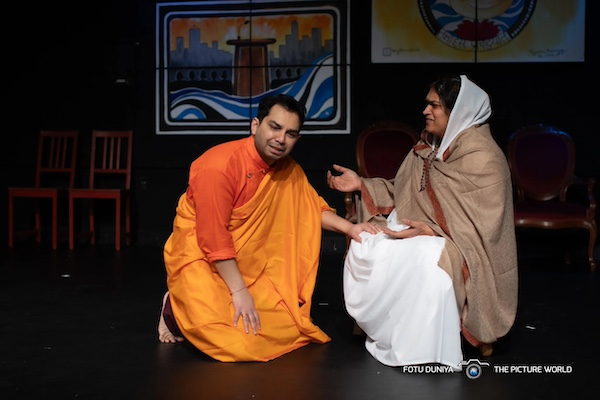
The play leans into emotion—and it works. It ends not in triumph, but in introspection, even a sense of incompleteness. A deeply moving scene shows him resting on the lap of his mother, Bhuvaneshwari Devi—poetic, touching, even if not historically documented.
What stands out most is the intent: to make Vivekananda relatable. To show his doubts, his struggles, his humanity. The research is evident, especially in the attention given to the Western women who played key roles in his journey.
Capturing a figure this vast is no small task—but SETU takes it on with sincerity and courage. And if this production sparks even a single question—Who was Vivekananda, really?—it has already succeeded.
A slightly stronger close could have reflected the sheer scale of his impact—how Swami Vivekananda inspired India’s freedom movement, influenced thinkers like Sri Aurobindo, supported pioneers like Jagadish Chandra Bose, and contributed to the founding vision of the Indian Institute of Science—among so much more.
For anyone who takes pride in India’s heritage, it is powerful to remember that Vivekananda carried that pride at a time when India stood under colonial rule and its traditions were often dismissed. His ability to embrace what was good everywhere, while also confronting and correcting the flaws within his own society, is his enduring legacy.
His life is not just history—it is a call to engage, to reflect, and to grow. And if this presentation encourages even a few to begin that journey, it has truly done its job. Kudos to SETU for creating a play that is informative, entertaining and very touching.