Contribute
| Carnatic Music Arangetram: Sahana Miduturu |
Rayadurgam Ravikanth
02/06/2026
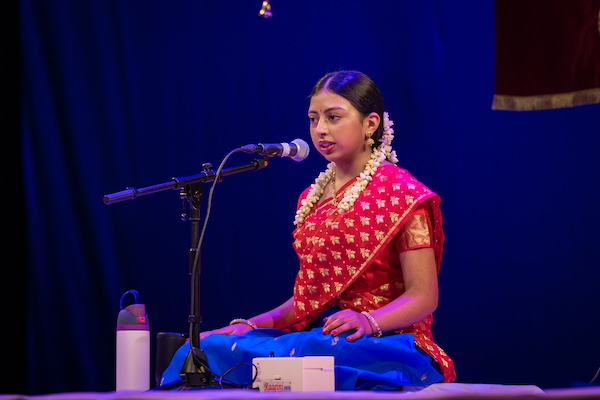
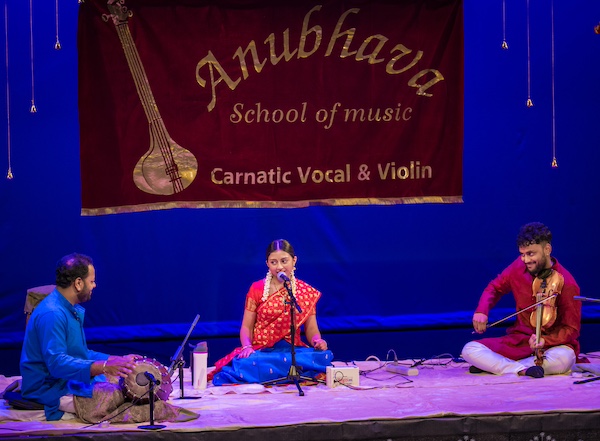
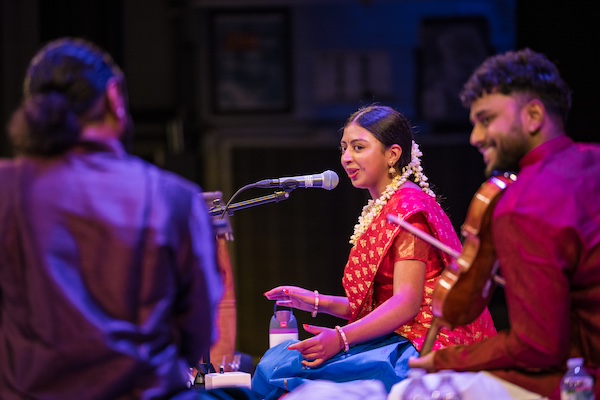
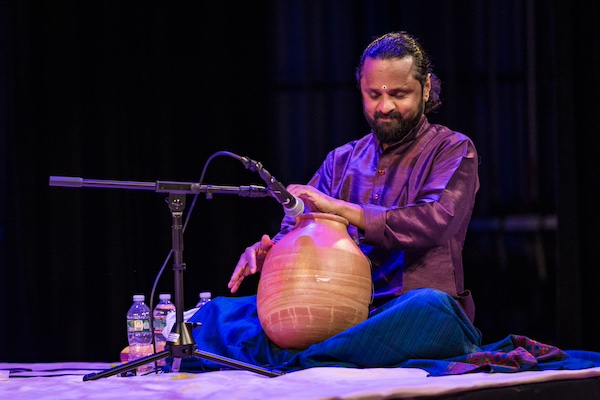
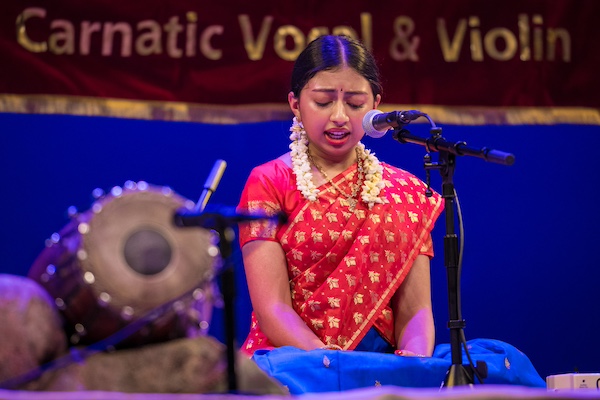
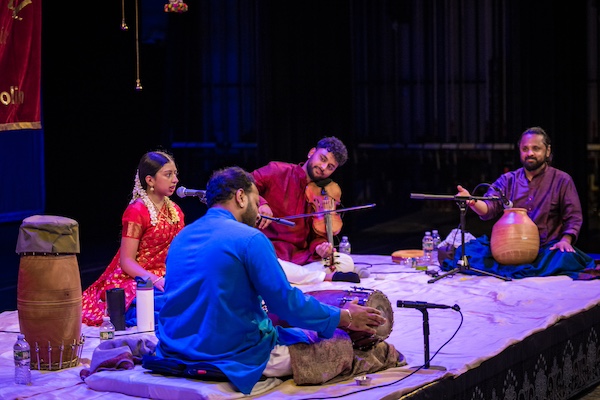
Carnatic Music Arangetram of Sahana Miduturu Sahana Miduturu, a student of the esteemed Guru Smt. Tara Bangalore, presented her Carnatic music arangetram at Regis College on August 10, 2025. This was a delightful concert that showcased a fine blend of aesthetics, sensitivity, and technical fundamentals—qualities that Sahana has clearly imbibed from her revered guru, Smt. Tara Bangalore. After a brief invocation, Sahana opened the concert with the popular navaragamalika Valachi varnam. What a delightful start it was! Rendered at a serene first kalam, she went on to present the pallavi, anupallavi, and muktayi svaram in four kalams. The chitta svarams were delivered dynamically, clearly demonstrating her control over layam. The inclusion of ragamalika svarams in the constituent ragas of the varnam was a thoughtful touch and an effective way to light up the concert right at the outset. For the next piece, Sahana began with a mellifluous outline of raga Hamsadhwani, followed by a beautiful rendition of Gajavadana Mampahi, a composition of Sri M. D. Ramanathan. The rendition carried a calm repose, reflecting the quintessential traits associated with the music of the legendary composer-musician himself. Dynamic svarams in both first and second kalams, beautifully accentuated by Yash Ravish on the violin, capped off the piece. Starting with the slokam “Shanthakaram,” Sahana presented Gangeya Vasanadhara in raga Hamirkalyani, a composition of Maharaja Swati Tirunal. Her rendition was soulful, allowing the natural flow and joy of the raga to shine through. She was able to effortlessly transfer this sense of enjoyment to the audience, who were left thoroughly entranced. It is often said that when an alapana is begun, the essence of the raga should be captured in the very first phrase. Sahana did just that as she launched into a detailed elaboration of Dhanyasi. As she explored the contours of the raga with grace and restraint, the audience was drawn into a deeply meditative and serene state. Yash Ravish, the local veteran, followed with his own delightful and sensitive interpretation on the violin. The alapana gave way to a chaste and bhava-laden rendition of Syama Sastri’s Meenalochana Brova, doing complete justice to the emotion the composer so poignantly conveys in the sahitya. The niraval at “Samajagamana neevu tamasamu seyaka” was handled with utmost sensitivity and creativity, after which Sahana and Yash wove kalpana svarams in elegant rhythmic patterns to bring the piece to a graceful conclusion. This was followed by a brisk rendition of Muthuswamy Dikshitar’s Marakathalingam Chintayeham in the evergreen raga Vasantha, providing a striking contrast to the meditative mood of the preceding piece. Sankarabharanam, one of the grandest ragas in Carnatic music, was chosen for the main piece as Sahana presented the iconic Tyagaraja kriti Emi Neramu Nannu Brova. With her powerful voice, she essayed an exemplary alapana, focusing on exploring the myriad shades of the raga in a relaxed tempo, with well-crafted madhyama-kala phrases delivered with conviction. The exploration progressed beautifully through the tara sthayi, steadily building anticipation, and the eventual arrival at the mel-sthayi proved a veritable treat. It was clear that Sahana understood the mood of the kriti to follow and aligned the alapana to it. Yash Ravish’s response on the violin was delightful and imaginative, drawing out the nuances of the raga while sustaining the contemplative mood Sahana had established. Sahana sang the kriti in its full grandeur, ensuring that listeners fully experienced the devotion and austerity conveyed by the saint-composer. With her strong voice, she rendered the kriti with intent, shaping each phrase with appropriate emphasis and sensitivity. Special mention must be made of how all the accompanists came together to elevate this piece. The niraval at “Devadevudani Deenabandhuvani” was deeply introspective, with both Sahana and Yash allowing the emotion of the sahitya to come to the fore. The exchange of kalpana svarams reflected the beauty of the raga and the weight of the sahitya, rather than prioritizing flashy fireworks. The percussionists, seasoned veterans that they are, were particularly supportive throughout, embellishing the svarams with sensitivity and setting the stage for an engaging tani avartanam. Tarun Bangalore on the mridangam and Sri Giridhar Udupa [1] on the ghatam explored varied nadais and tempos with excellent coordination, building on each other’s ideas and drawing enthusiastic applause from the audience. Sri. Giridhar Udupa is a world-renowned percussionist and Sahana was indeed truly blessed to be able to perform with him and to be supported by him in her debut performance. The next piece was Anathudanu Ganu, a Tyagaraja kriti in the rare raga Jingala. Rendered at a blistering pace, it featured all the accompanists joining in with great precision, creating an exhilarating interlude before the next major item. Through this piece, Sahana demonstrated her versatility in handling contrasting moods and tempos—an essential trait for a musician. The raga chosen for the Ragam Tanam Pallavi was Shubhapantuvarali, a weighty raga typically attempted only by seasoned musicians. Sahana was more than equal to the task, presenting an alapana full of weight and substance. As a mark of her confidence and ability, she executed a nuanced graha bhedam to Mohanam. Yash followed with a chaste and engaging response on the violin, further immersing the audience in the raga. The tanam was an absolute delight, with the percussionists providing subtle punctuation as Sahana explored escalating tempos, even as the mood transformed from poignancy to ebullience. The pallavi, “Mahabaladri Sthithe Namaste Sri Chamundambike Varade,” a composition of the late Smt. Suguna Purushottaman, set to tisra jathi triputa talam in khanda nadai, was handled with clarity and precision. The niraval and trikalam were suffused with bhavam even as she negotiated intricate rhythmic patterns with assurance. Beginning in Shubhapantuvarali and followed by ragamalika svarams, the kalpana svarams featured a wonderful exchange between Sahana and Yash, with ideas flowing in torrents—bringing the Ragam Tanam Pallavi to a fitting conclusion that was enthusiastically appreciated by the audience. The post-RTP segment featured a mellifluous medley consisting of Koovi Azhaithal in Valaji, the Meera bhajan Main Hari Charanan Ki Dasi in Yamunakalyani, and Jayathi Jayathi Bharatha Matha in Khamas. She concluded with a tillana in Kathanakuthuhalam, a composition of Vidwan Sri M. Balamuralikrishna. The tongue-twisting jathis, swarams and lyrics were rendered with precision and speed, and the enthusiastic interplay among all the artistes on stage provided a fitting and joyous conclusion to the concert. Sahana ventured into her arangetram with a demanding lineup that required her to internalize weighty ragas and compositions, and she emerged with flying colors, singing throughout with conviction. Across the concert, she demonstrated strong technical ability while remaining firmly rooted in bhava—a balance she has undoubtedly imbibed from her esteemed guru, Smt. Tara Bangalore. Yash Ravish (violin), Tarun Bangalore (mridangam), and Sri Giridhar Udupa (ghatam) are seasoned accompanists, and their contributions were immense, as they skillfully embellished the vocalist’s ideas with sensitivity and restraint. Guru Smt. Tara Bangalore and the students of her Anubhava school continue to enrich the Indian classical music scene through performances of the highest quality. Our deepest gratitude to her for nurturing and propagating this art form for generations to come.
You may also access this article through our web-site http://www.lokvani.com/