Contribute
| Arangetram – Priscilla Srikanth |
12/06/2025
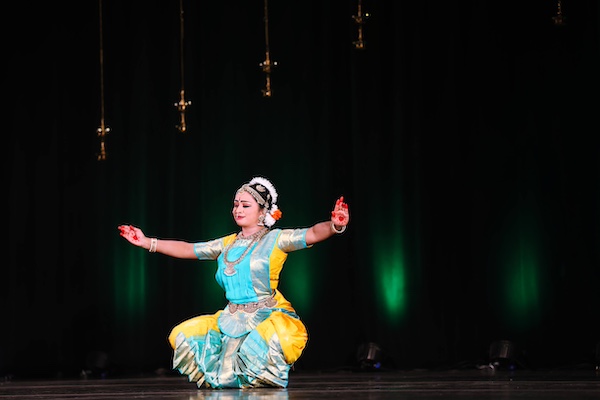
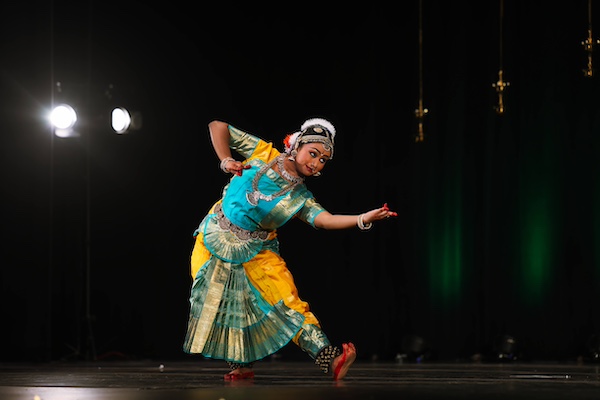
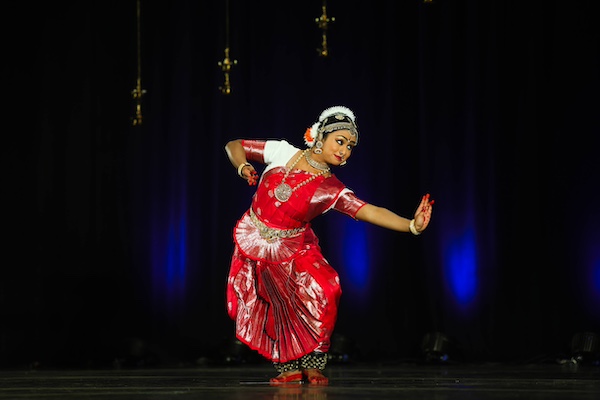
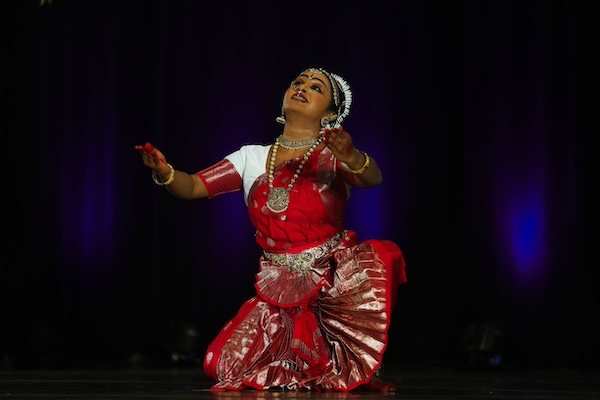
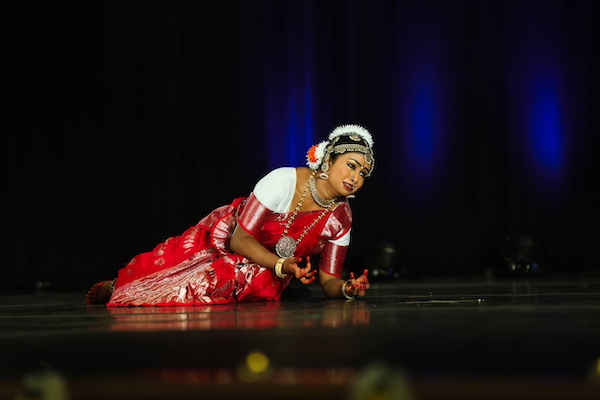
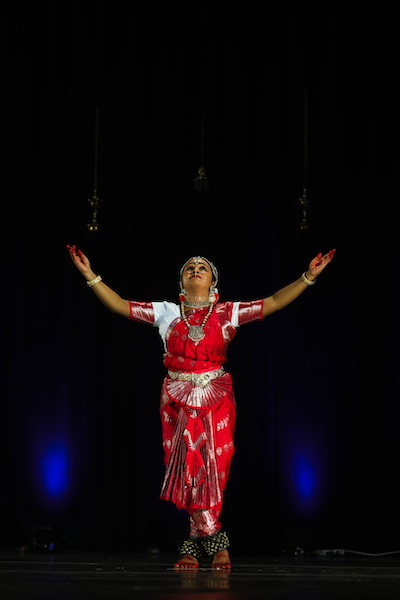
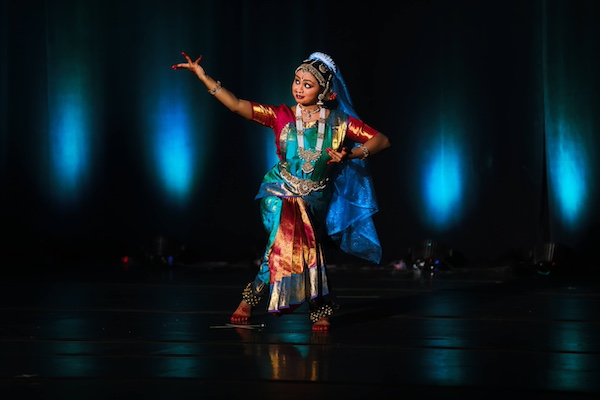
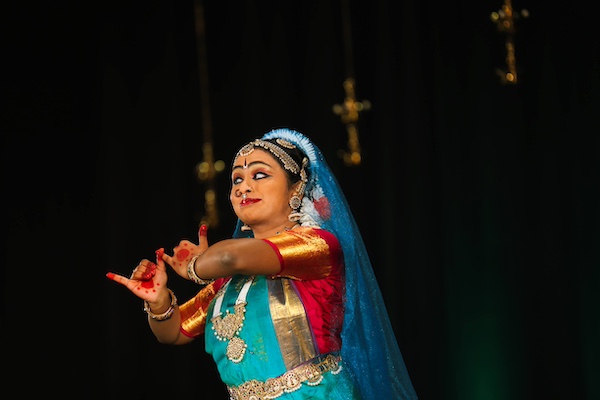
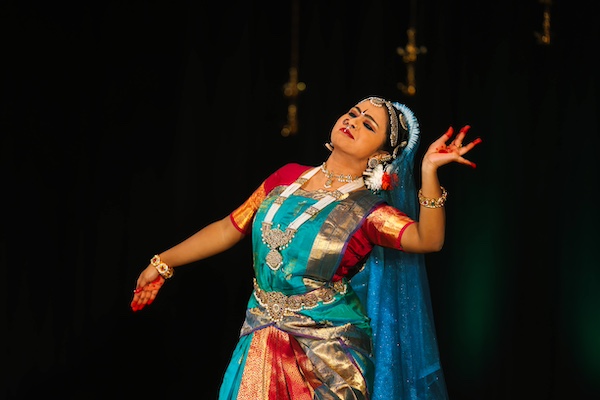
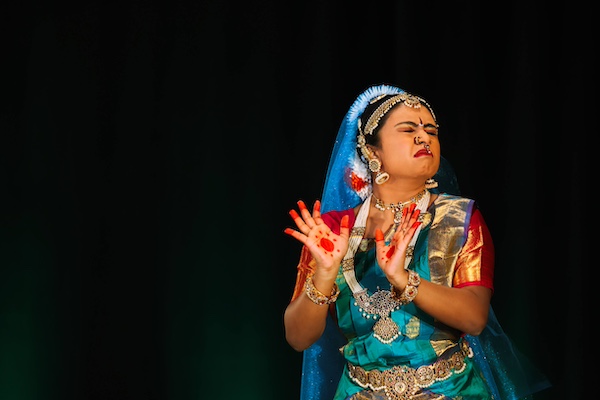
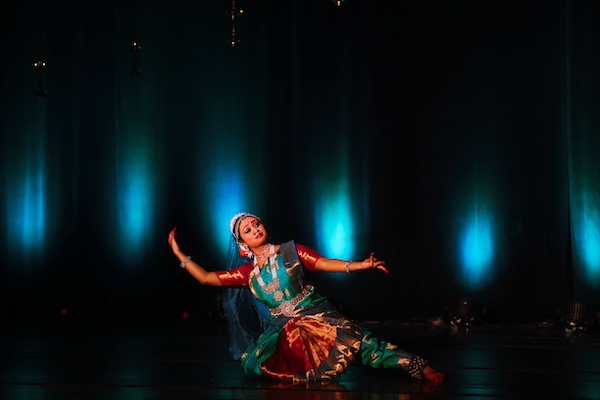
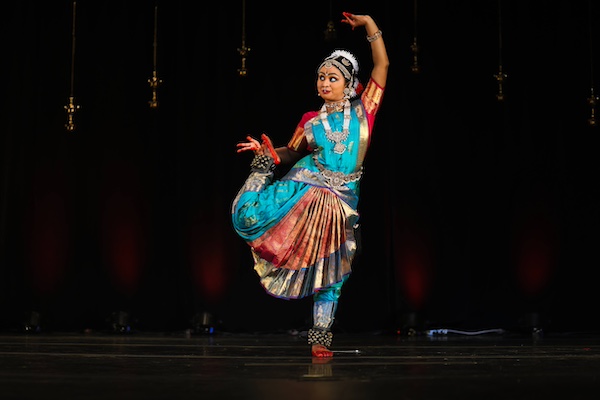
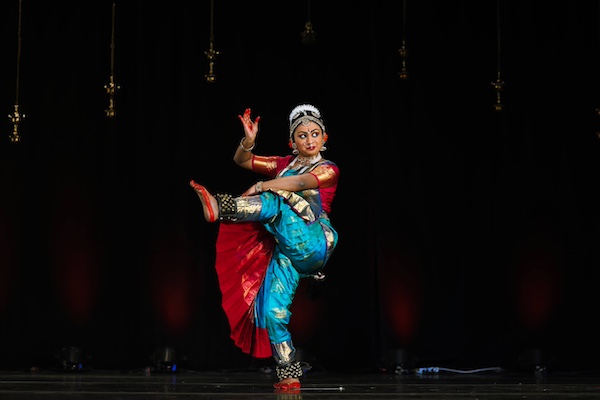
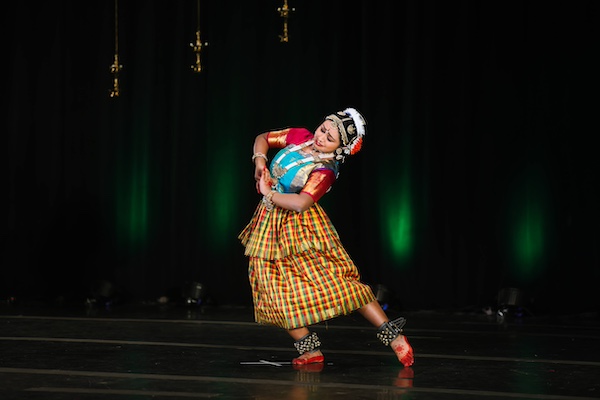
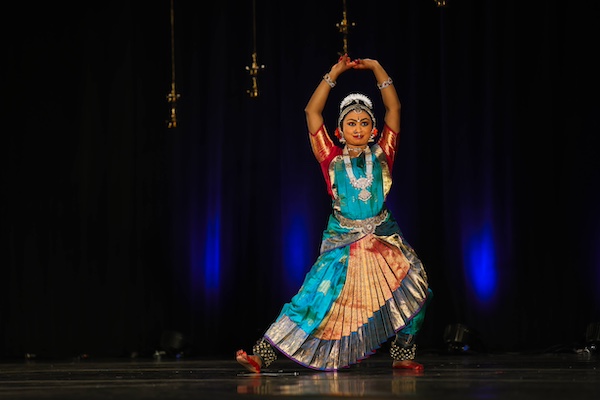
Arangetram – Priscilla Srikanth Review by : Mrs . Thara Thattacherry – Middleton MA In the late 19th century, King David Kalakaua of Hawaii remarked that “Hula is the language of the heart, and therefore the heartbeat of the Hawaiian people”. Like hula, Bharatanatyam is a dance form rooted in the tradition of storytelling, and is a vital expression of Indian identity and values. This is apparent in the lauded ceremony of an arangetram, where young dancers accept the responsibility of cultural preservation and appreciation in their official debut as a professional dancer. On the evening of Saturday, October 4th, 2025, Priscilla Srikanth, disciple of guru Smt. Kalpana Balachundhar, united the collective heartbeat of her captivated audience in a dazzling display of skill, elegance and culture. Through her movements, expressions, and passion, Priscilla left her heart on stage and etched her personal rhythm into the stories she told. The recital opened with a prayer dance to Jesus praising Him to be the quintessential human being present in all elements of the universe. Though quite contrary to the usual plea to Lord Vigneshwara to remove all obstacles, not only did it make one aware of God being transcendental to religion, it also set the expectation of more surprising deviations to come. Next was the Alarippu followed by Jathiswaram; both executed with crisp yet graceful footwork that Priscilla showcased in tandem with the rhythm. The audience were then entertained to a short and melodious musical interlude by Smt.Bhuvana Ganesh, a well-known teacher in the local community accompanied by her student Amal Balachundhar. Priscilla’s next piece, the varnam, was a true testament to the idea presented in the opening dance; veering away from the ordinary. The gospels in the New Testament of the Holy Bible were woven into an extraordinary musical journeying through the birth, life, death and resurrection of Jesus Christ. The composition was by Kalaimamani Madurai R. Muralidharan sir which truly deserves applause. The underlying emotion of love and compassion towards mankind was presented adeptly with a concise representation of his miraculous acts and the suffering through His passion, death on the cross, followed by the resurrection promising freedom and hope. The item was a great opportunity to depict nuances of abhinaya which Priscilla exploited to the fullest. The story telling, especially the portrayal of the passion of the Lord was impeccably done without the support of props, unnecessary musical notes or lighting. All the jathi sequences were at a highly advanced level and Priscilla maintained her stamina throughout with a charming smile on her face. The second half of the program set out a playful and thoroughly enjoyable series of short dances that showcased her mastery in the varied nuances of the art form. First portraying a lovelorn maiden, an ardent devotee of Lord Krishna yearning for his presence in Alaipayuthe Kanna, she quickly transformed to the vibrant piece Bho Shambo depicting Shiva as the bearer of ganga, the destroyer of obstacles and the granter of happiness and prosperity. The ease with which Priscilla seamlessly veered in and out of vastly differing characters was admirable and clearly visible with her Kavadi Chindu where folk met classical – a truly lilting number. To close, Priscilla became Valli, the nayika who shares her thoughts on Lord Muruga and praises his attributes with her friend. The Thillana in ragam Sindhu Bhairavi and adi thalam was the culminating item. Priscilla again demonstrated her technical proficiency, artistic maturity and physical stamina cultivated through her years of learning and relentless practice. The footwork was precise, all twists and turns ended in perfect landing, The Mangalam drew the curtains on show while bringing the audience to their feet in a deafening applause. This music was very special to her, being composed by her god mother’s brother Rev. Fr. Denis Vaiz. Priscilla thanked God, her guru and mentors and seeked the continued support and blessings of family and friends in her artistic journey. Priscilla Srikanth’s arangetram on Oct 4, 2025 was a true finale to the Boston area rangapravesha season. Under the tutelage of her able guru Kalpana Balachunder and with the everlasting support of her parents and unwavering dedication throughout a decade long of ‘sadhana’, Priscilla guided a captive audience from the stage. The dance recital displayed not only her mastery of the art form but also her maturity, dexterity and stamina which she maintained until the end of Mangalam. As said by Leo Tolstoy, “Art…is a means of union among men, joining them together in the same feelings”. And for three beautiful hours, Priscilla’s audience sat captured, connected by not only the vivid emotions, built the strings of fate. ------------------------------------------------------------------------- Arangetram: “Her ontological being danced!” by Rex Arul, Atlanta, GA The Grand Prelude Priscilla’s dance recital – Arangettram – on that wonderful autumnal evening of October 4th 2025, took me back to that Greek playwright – Sophocles – who said: “One must wait until the evening to see how splendid the day has been.” In Priscilla’s case, that day is a dozen years – a dozen years of inveterate dedication, indefatigable passion, and indomitable flair for art, culminating in her tour de force that evening at Galvin Middle School in Wakefield, MA. As a close-friend of the family, I had not missed any major event of Priscilla’s. Naturally, I flew into Boston from Atlanta. I was stupefied by the scope of extensive and elaborate preparations for the event. Every punctilious detail, rivaled that of a grand, gala, wedding-reception, thanks to the superabundant love in action of Srikanth and Meena – Priscilla’s parents! A decorated statue of Our Lady of Velankanni welcomed everybody, while bearing a powerful witness to the strong Catholic roots of Priscilla’s. Traditional accouterments like vermilion, sandalwood powder, rose-water and rock-candies on the side, underscored the inculturation of faith and traditions. Guests clad in traditional, colorful, sartorial outfits trickled in, exchanging pleasantries, snagging pictures, while also capturing their cogent, felicitous reminiscences for Priscilla in a decorated Guest-Book. Real-sized flex-banners of Priscilla were at vantage locations. A huge background canvas of a Temple mandapam serving as a backdrop became the cynosure, alluring many a guest to congregate in front of it for more pictures. An online live streaming took-off primarily for the kith-and-kin in India. Although Srikanth whispered that unanticipated lighting and equipment issues may delay the commencement of the event, it sounded relatively minor then. However, as I strode inside the auditorium around 3:30 PM, I was nervous to see that the stage was nowhere ready to support a Bharatnatya Arangettram. Maintenance crews were galumphing with carts, equipment, and lights in disarray. The bedecked deities on-stage with Lord Nataraja, Infant Jesus of Prague, and the Holy Family, exuded a welcome sight of readiness and serenity. I was bemused whether Priscilla had an opportunity to rehearse well on this stage, as her yearslong dreams and efforts now precariously hung around an unfinished stage. I prayed fervently that none of this should ennervate her. The Grand Performance Voltaire said, “Do not forget to sing in the lifeboat!” Well, what followed for the next 3½ hours vouched for that spirit, which was not only on full display with Srikanth-Meena, but also in how well it was inculcated in Priscilla! The Arangettram began with a note of benisons, blessings, and prayers, with the family, their kith-and kin (including me) and the Catholic priests coming forward to pray over Priscilla. With deep reverence and passion, she was ready for her Grand finale of dance! It started with a Tamil hymn of Invocation to the Almighty, performed by the choir of Boston Tamil Catholics. It was now Priscilla’s turn to beseech the blessings of the Lord Almighty. She started the Prayer Dance, with a strong Christological ethos as the Omnipresent Lord present in any and all forms. This was set to the Charukesi Ragam and Adi Talam. Draped in a yellow saree with an azure-green patterned border, Priscilla did obeisance to the deities on stage, before giving herself up to the rhythms of her performance. The disarray that had besot the stage up until the start of the function, by now had become evanescent. It looked as though the stage had come back to life – not due to its lighting and other arrangements – but to this magical dance of Priscilla beseeching the blessings from her Creator. Towards the end of this dance, her step segued to a photo-finish with her hands extended outward towards her Creator, before coming to a complete stop with those hands now raised up, towards the Heavens. The mellifluous voice of singer Late Mr. SP Balasubrahmanian embellished the doxology imbued within the lyrics in Tamil. When Priscilla gave another dimension to it, with her graceful performance to this song, it only reminded me of St. Paul’s words from Romans 11:36. (“For of him, and through him, and to him, are all things: to whom be glory for ever. Amen.”) The second to engross us was a florid, blossoming of the Arangettram itself. It was rightly titled as Alarippu, connoting the blossoming of a floral bud, with Priscilla piquing us with measured, dance movements, right from her eyes, head, neck, and other parts of her body. The debutant was trying to get into her dancing orbit, with this number, as the slower movements picked apace with the rhythms. This was set to Naatai Ragam and Rupakam Talam. The graceful finish of this number presented Priscilla with her two arms in a firmly-held, prayerful position. In between Priscilla’s dances, the emcees were presenting an enviable biography of all the activities that Priscilla was actively engaged on. Her multifarious set of activities ranged from classical to folksy and film dances, besides being an active piano virtuoso for about 8 years. Friends of the family and her peers also shared so many salutary facets of her that gave us all an ennobling and inspiring perspective of her. The third one to follow was Jathiswaram in Ragamalika Ragam and Misra Chapu Talam, with its focus slanted more towards the physical movements, while being devoid of facial emotions and emotive elements. I found this to be a sort of litmus test, in a subtle way, for the debutant to strengthen herself – ontologically speaking – for the most demanding, longest Varnam to come next. A guest performance at this juncture in the form of the classical singing of Kurai Ondrum Illai Maraimoorthy Kanna, not only provided the ineluctable break for Priscilla to have a dress change for her next performance, but, took me back to the hinterlands of Tamil Nadu, where this song was a constant presence, conjuring fond memories of the Classical Singer M.S. Subbulakshmi dominating the airwaves of All India Radio. This is yet another example of an evening, in which Art teleported the audience to the sublimity of Indian Classical singing and dance art forms. At this very juncture I was reminded of Albert Camus “If the world were clear, art would not exist.” The cataract of modern-life with its ever weighing-down presence, only cries with longing for the indispensability of art – in all its forms. This evening underscored that. I will readily agree with the emcee, who called the fourth one as the pinnacle of the entire Arangetram. In fact, at every Arangetram, I will be Argus-eyed to see how the debutant performs in what is called as Varnam. This was a towering, pioneering, number, which was challenging not only to Priscilla, but even to her Dance guru Ms. Kalpana Balachundhar. As Priscilla is a Roman Catholic by faith, she had pioneered something that I had never witnessed before. That I was horripilated, is an understatement, because this longest and most-demanding number was new for everyone. Because, this was a 100% Christological number, wherein the composition was set to depict the entire life, teachings, death, resurrection and ascension of the Second Person of the Holy Trinity, the Savior and Lord Jesus Christ. This is a tight-rope walk for both Priscilla and her guru, because, this has to be theologically solid; traditionally (from a Bharatanatyam perspective) should not swerve from the dance rubrics; while also allowing a 17-year old Priscilla to be able to emote, move, and dance all the powerful emotions of the pain, gore, and suffering of Crucifixion before having to do a volte face on her emotions to depict Christ Jesus’ ultimate victory in His glorious Resurrection. While Priscilla’s guru was humble, asking the audience to be more forgiving should there be anything theologically tenuous, I did not see anything wrong in the way it was presented. Rather, I was way more moved, entranced, touched and spellbound by the conception and delivery of an immaculately, novel, pioneering and flawless performance. The choice of the color for her dress – a bright, ruddy, red saree – deserves special mention, as it reminded one of the red-colored vestments in the Catholic Church, reserved for certain feast days involving the Lord’s Feasts of Crucifixion or Saints and Martyrs. Priscilla’s apt transition to this dress, brought out that ethos in the most poignant way possible. The moving movements of Varnam, precisely were witnessed when Priscilla so beautifully, gracefully, reverentially and poignantly narrated through her being, the sufferings of Christ at Golgotha during His Crucifixion. I was dumbfounded that a young child of her age could emote this powerfully, the spectrum of such complicated vagaries of suffering, through a dance art-form. This is a pioneering and novel achievement. For one, I have not seen a Bharatanatyam dancer, seamlessly seguing to a posture, where she performs the Sign of the Cross as part of her dance step! Priscilla and her gurus have paved way for many other Christians to aspire and dare to do Arangettram, without having to depart from their Christian faith. This singular aspect of pioneering and resourceful nuance has made it a sui generis dance Arangettram event for me, the experience of which will stay forever. Everyone, starting from Priscilla, her gurus, Meena-Srikanth, and anybody remotely associated with the ideation, cerebration, conception and execution of this Varnam deserves all the accolades, encomiums, and gratitude. Most notably, its Composer Kalaimamani Mr. Madurai R. Muralidharan. At this point, there was an intermission wherein fresh Mysurpa and cutlets, coffee and tea were freshly served. It was yet another opportunity for everyone to exchange their admiration and surprise on how well Priscilla’s dance performance was going, up until this point. After intermission, the fifth performance was the famous Alaipayuthey Kanna set to Kaanada Ragam and Adi Talam, where Priscilla beautifully brought out the ethos of holy longing with postures that remain indelibly etched in my mind. An added endearing sight was to see her don a long veil, which was a diadem to her performance itself. The sixth number to follow suit was Bho Shambo that brought out the strong, thunderous, vibrancy of the cosmic dancer’s dance moves, set to Revathi Ragam and Adi Talam. The seventh number that brought out the finesse and flexibility of Priscilla was the folk number in Kavadi Chindu set to Chenchurutti Ragam and Adi Talam. Besides the folksy performance here, it is also imbued with elements of holy-ecstasy, wherein Priscilla beautifully brought those tenets with elan, class, and innocence. The penultimate eighth number was Thillana set to Sindhu Bhairavi Ragam and Adi Talam that brought out Priscilla’s vivacity and blissful joy and creative, natural, self. The final ninth number was the customary Mangalam set to Sangarabharanam and Kalyani Ragam, a valedictory number expressing gratitude to the Almighty, her gurus, family, friends, and all that were in the audience for supporting her on clearly what was her day! Finis Coronat Opus Finis coronat opus – the end crowns the work, they say! This Arangettram was that culmination of all the hard-work of twelve, long years! Congratulations and kudos to Priscilla! It is unfathomable as to how she managed to do this extended debut performance, in front of such a huge crowd, on a huge stage, that did not even allow her much opportunities to do final rehearsals during her critical, final hours leading up to the Arangettram itself. This shows Priscilla’s tenacity, longanimity, and sangfroid, rising up to any challenges, without losing her grace, attitude, or focus. Bravo! Aristotle said, “Those who educate children well are more to be honored than they who produce them: for these only gave them life, those the art of living well.” In this case, Priscilla’s first teachers continue to be her parents – Srikanth and Meena. The values they have instilled and inculcated in Priscilla is for all to see, including how gracefully she handled the issue with the unforeseen, when it came to the stage’s preparedness and lights. Her dance guru, Ms. Kalpana Balachunder, deserves laurels and plaudits. And Mr. Madurai R. Muralidharan deserves special kudos for conceiving and composing the Varnam. In the New Testament, Priscilla is a pioneer in actively ministering, teaching, and helping the fledgling Christian community that she deserves personal mentions by St. Paul. I got to see that kind of a pioneering spirit in what Priscilla has done with her Bharatanatya Arangettram. She not only had worked hard to climb to her own pinnacle, but, in doing so, she has laid out a clear-cut path for her other fellow Christians, as to how to be able to do their own Indian classical dance recitals by being true to its traditions and rubrics, while also being true to their faith. As Helen Keller said, “The best and most beautiful things in life cannot be seen or even touched, they must be felt with the heart.” I felt that sublime feeling of being elevated by art, class, and grace at Priscilla’s Arangettram. These 4 hours will always remain as one of the best, I had ever spent – to be one with myself and my Creator, in peace, joy, awe and wonder. Priscilla’s Varnam performance was nonpareil, out of all the equally wonderful other numbers she did. May the Lord continue to keep her, bless her, and strengthen her. “Let your light so shine…that they may see your good works, and glorify your Father in heaven. (Matt 5:16)” Glory to God for all things!
You may also access this article through our web-site http://www.lokvani.com/